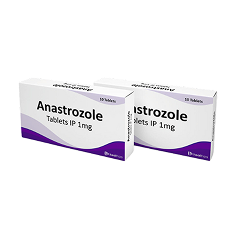
What Is Anastrozole 1 mg?
Anastrozole 1 mg Tablets contain anastrozole, a potent nonsteroidal aromatase inhibitor used in endocrine therapy for certain types of breast cancer.
Breast cancer is a condition in which abnormal cells grow uncontrollably in breast tissue.
Some breast cancers depend on hormones, particularly estrogen, to support their growth.
These cancers are known as hormone receptor-positive breast cancers.
In postmenopausal women, the ovaries produce very little estrogen, and much of the remaining estrogen is produced through the conversion of androgen precursors into estrogens in peripheral tissues.
An enzyme called aromatase plays a central role in this process.
Anastrozole inhibits the aromatase enzyme, significantly reducing estrogen production.
Lower estrogen concentrations reduce hormonal stimulation of susceptible breast cancer cells.
This may help slow tumor progression and reduce the risk of recurrence after appropriate primary treatment.
Anastrozole is commonly prescribed as adjuvant endocrine therapy after surgery for hormone receptor-positive early breast cancer in postmenopausal women.
It may also be used for selected advanced or metastatic breast cancers.
Treatment decisions depend on hormone receptor status, menopausal status, cancer stage, previous treatments and other clinical factors.
Anastrozole is usually taken orally once daily.
Because estrogen is important for maintaining bone health, long-term anastrozole treatment may increase the risk of bone mineral density loss and fractures.
Important: Anastrozole should only be used under the supervision of a qualified healthcare professional experienced in breast cancer treatment.
How Does Anastrozole 1 mg Work?
1. Inhibits the Aromatase Enzyme
Anastrozole selectively inhibits aromatase, an enzyme responsible for estrogen synthesis.
2. Reduces Estrogen Production
It decreases the conversion of androgen precursors into estrogens.
3. Lowers Circulating Estrogen Levels
In postmenopausal women, anastrozole substantially reduces circulating estrogen concentrations.
4. Limits Estrogen Receptor Stimulation
Certain breast cancer cells rely on estrogen receptor signaling for growth.
5. Reduces Hormone-Dependent Tumor Growth
By reducing estrogen availability, anastrozole may slow or suppress the growth of estrogen-dependent breast cancer cells.
6. Supports Adjuvant Endocrine Therapy
Anastrozole may reduce the risk of recurrence after primary treatment of appropriately selected early breast cancers.
7. Supports Advanced Breast Cancer Management
It may help control selected advanced or metastatic hormone receptor-positive breast cancers.
8. Provides Sustained Aromatase Inhibition
Once-daily administration provides sustained suppression of aromatase activity.
Important: Anastrozole does not directly destroy all cancer cells and does not guarantee a cure or complete tumor response.
Uses of Anastrozole 1 mg
1. Early Hormone Receptor-Positive Breast Cancer
Anastrozole is used as adjuvant endocrine therapy in postmenopausal women with hormone receptor-positive early breast cancer.
2. Reduction of Breast Cancer Recurrence Risk
After appropriate primary treatment, anastrozole may reduce the risk of cancer recurrence in selected patients.
3. Advanced Breast Cancer
Anastrozole may be prescribed for certain advanced breast cancers in postmenopausal women.
4. Metastatic Breast Cancer
It may be used to treat selected metastatic hormone receptor-positive breast cancers.
5. Breast Cancer After Previous Endocrine Therapy
Anastrozole may be used in selected patients whose disease progresses following certain previous hormonal treatments, depending on the treatment setting.
6. Estrogen-Dependent Breast Cancer Management
Anastrozole helps reduce estrogen stimulation in susceptible breast cancer cells.
7. Long-Term Adjuvant Endocrine Therapy
Anastrozole is commonly used as part of a multi-year endocrine treatment plan.
8. Selected Neoadjuvant Endocrine Therapy
In certain postmenopausal patients, anastrozole may be used before surgery under specialist guidance to reduce tumor size.
9. Specialist-Directed Hormonal Cancer Treatment
Anastrozole may be included in individualized oncology treatment strategies based on disease characteristics and clinical guidelines.
Important: Anastrozole is not an appropriate treatment for every type of breast cancer.
Its use depends particularly on hormone receptor status and menopausal or ovarian suppression status.
How to Take Anastrozole 1 mg
Anastrozole should be taken exactly as prescribed.
General Administration Instructions
- Confirm the prescribed strength and treatment schedule.
- Take the tablet orally with water.
- Swallow the tablet whole.
- Take it with or without food.
- Take it at approximately the same time each day.
- Follow the prescribed treatment duration.
- Do not increase or decrease the dose without medical advice.
- Do not discontinue treatment without consulting the oncology team.
- Inform the healthcare professional about other medicines and supplements.
- Attend scheduled oncology follow-up appointments.
- Report persistent joint pain or other significant adverse effects.
- Follow recommended bone health monitoring.
- Inform the healthcare professional about any new fractures or severe bone pain.
- Follow the prescribed treatment plan consistently.
Dosage Information
| Treatment Indication | General Dosage Guidance |
|---|---|
| Early Hormone Receptor-Positive Breast Cancer | 1 mg Once Daily |
| Advanced Breast Cancer | 1 mg Once Daily |
| Metastatic Breast Cancer | 1 mg Once Daily |
| Selected Neoadjuvant Endocrine Therapy | Specialist-Directed Regimen |
| Administration | With or Without Food |
| Treatment Duration | Determined by Oncology Treatment Plan |
| Adjuvant Treatment Duration | Often Approximately 5 Years; May Vary |
| Kidney Impairment | Dose Adjustment Is Generally Not Required |
| Mild to Moderate Liver Impairment | Dose Adjustment Is Generally Not Required |
| Severe Liver Impairment | Limited Clinical Data; Specialist Assessment Required |
| Missed Dose | Follow Prescribing Instructions |
| Dose Adjustment | Only Under Medical Supervision |
Important: The standard adult dose for approved breast cancer indications is generally 1 mg once daily.
The appropriate treatment duration depends on the patient’s diagnosis, treatment history, risk factors and oncology plan.
Can Anastrozole Be Taken With Food?
Yes. Anastrozole may be taken with or without food.
Can Anastrozole Be Taken Every Day?
Yes. It is commonly prescribed once daily for breast cancer endocrine therapy.
Can Anastrozole Be Taken in the Morning?
Yes. It may be taken in the morning or evening, according to the prescribed schedule.
Can Anastrozole Be Taken With Tamoxifen?
Anastrozole and tamoxifen should not routinely be taken together because concurrent use may reduce anastrozole exposure without providing additional benefit in established treatment settings.
What If a Dose Is Missed?
Take the missed dose when remembered unless it is nearly time for the next scheduled dose.
Do not take two doses together.
What If Too Much Anastrozole Is Taken?
Seek medical advice promptly.
Overdose management generally involves clinical assessment and supportive treatment.
How Long Does Anastrozole 1 mg Take to Work?
Anastrozole begins inhibiting aromatase after administration.
During the First Several Days
Estrogen concentrations begin decreasing.
During the First Few Weeks
Sustained estrogen suppression develops with regular dosing.
During Breast Cancer Treatment
Clinical benefits develop over time and depend on the disease and treatment setting.
During Long-Term Adjuvant Therapy
The goal is to reduce recurrence risk over an extended treatment period.
During Advanced Breast Cancer Treatment
Treatment response is assessed through symptoms, physical examinations and imaging studies.
Important: Anastrozole does not guarantee immediate symptom improvement or complete cancer remission.
Common Side Effects
Possible side effects include:
- Hot Flashes
- Joint Pain
- Joint Stiffness
- Muscle Pain
- Fatigue
- Headache
- Nausea
- Weakness
- Increased Sweating
- Sleep Disturbances
- Mood Changes
- Hair Thinning
- Vaginal Dryness
- Bone Pain
- Elevated Cholesterol
- Reduced Bone Mineral Density
- Skin Rash
- Peripheral Swelling
Not every patient experiences these effects.
Serious Side Effects
Seek urgent medical attention if any of the following occur:
- Chest Pain
- Sudden Shortness of Breath
- Stroke-Like Symptoms
- Severe Allergic Reactions
- Swelling of the Face or Throat
- Severe or Persistent Bone Pain
- Suspected Bone Fracture
- Severe Skin Reactions
- Yellowing of the Skin or Eyes
- Significant Visual Disturbances
Important Serious Risks
1. Bone Mineral Density Reduction
Anastrozole reduces estrogen levels and may accelerate bone loss.
2. Osteoporosis
Long-term treatment can increase the risk of osteoporosis.
3. Bone Fractures
Reduced bone mineral density may increase fracture risk.
4. Cardiovascular Events
Anastrozole may be associated with cardiovascular risks, particularly in patients with pre-existing ischemic heart disease.
5. Elevated Cholesterol
Changes in lipid levels may occur during treatment.
6. Liver Function Abnormalities
Liver enzyme elevations and rare clinically significant liver injury have been reported.
7. Severe Hypersensitivity Reactions
Serious allergic reactions require immediate medical attention.
8. Severe Skin Reactions
Rare serious dermatological reactions have been reported.
9. Musculoskeletal Symptoms
Persistent joint pain, stiffness and muscle discomfort may affect treatment adherence.
Contraindications & Precautions
1. Pregnancy
Anastrozole can cause fetal harm and should not be used during pregnancy.
2. Breastfeeding
Breastfeeding is not recommended during treatment and for the period specified in the product labeling after the final dose.
3. Hypersensitivity
Patients with known serious hypersensitivity to anastrozole or formulation components should avoid the medicine.
4. Premenopausal Women
Anastrozole is generally intended for postmenopausal breast cancer treatment.
In premenopausal patients, use requires a specialist-directed strategy that appropriately addresses ovarian estrogen production.
5. Osteoporosis
Patients with osteoporosis require careful bone health assessment.
6. Bone Mineral Density Monitoring
Bone density testing may be recommended before and during long-term treatment.
7. Previous Bone Fractures
Patients with a history of fragility fractures may require additional assessment.
8. Elevated Cholesterol
Lipid monitoring may be appropriate during treatment.
9. Cardiovascular Disease
Patients with existing cardiovascular disease require individualized assessment.
10. Ischemic Heart Disease
Patients with pre-existing ischemic heart disease may require particular cardiovascular monitoring.
11. Liver Impairment
Severe liver impairment requires specialist assessment because clinical data are limited.
12. Kidney Impairment
Renal function should be considered as part of the patient’s overall clinical evaluation.
13. Estrogen-Containing Medicines
Estrogen-containing medicines may reduce the intended pharmacological effects of anastrozole.
14. Tamoxifen Interaction
Concurrent tamoxifen administration is generally not recommended.
15. Driving and Machinery
Fatigue, dizziness or weakness may affect the ability to drive or operate machinery.
16. Long-Term Treatment
Long-term therapy requires ongoing evaluation of benefits and adverse effects.
17. Treatment Adherence
Consistent administration is important for prescribed endocrine therapy.
18. Medical Monitoring
Healthcare professionals may monitor:
- Breast Cancer Treatment Response
- Symptoms of Recurrence
- Bone Mineral Density
- Osteoporosis Risk
- Bone Fracture Risk
- Serum Cholesterol
- Cardiovascular Health
- Joint Pain and Stiffness
- Muscle Pain
- Liver Function When Indicated
- Kidney Function When Indicated
- Menopausal Status
- Medication Tolerability
- Treatment Adherence
- Drug Interactions
- Overall Clinical Condition
Potential Therapeutic Advantages
- Nonsteroidal Aromatase Inhibition.
- Estrogen Production Suppression.
- Hormone Receptor-Positive Breast Cancer Treatment.
- Early Breast Cancer Adjuvant Therapy.
- Breast Cancer Recurrence Risk Reduction.
- Advanced Breast Cancer Management.
- Metastatic Breast Cancer Treatment.
- Selected Neoadjuvant Endocrine Therapy.
- Oral Once-Daily Administration.
- Established Endocrine Therapy.
- Long-Term Hormonal Treatment.
- Specialist-Directed Oncology Management.
- 1 mg Oral Tablet Formulation.
Disadvantages / Limitations
- Hot Flashes.
- Joint Pain.
- Joint Stiffness.
- Muscle Pain.
- Fatigue.
- Headache.
- Nausea.
- Hair Thinning.
- Vaginal Dryness.
- Reduced Bone Mineral Density.
- Osteoporosis Risk.
- Bone Fracture Risk.
- Elevated Cholesterol.
- Possible Cardiovascular Effects.
- Liver Function Abnormalities.
- Pregnancy Contraindication.
- Requires Long-Term Monitoring.
- Requires Medical Supervision.
Important Notes
Generic Name: Anastrozole.
Strength: 1 mg.
Drug Class: Nonsteroidal Aromatase Inhibitor.
Therapeutic Category: Anticancer Hormonal Therapy.
Primary Use: Hormone Receptor-Positive Breast Cancer.
Mechanism of Action: Aromatase Inhibition.
Route: Oral.
Dosage Form: Tablet.
Standard Adult Dose: 1 mg Once Daily.
Administration: With or Without Food.
Important Long-Term Risk: Bone Mineral Density Reduction.
Additional Risks: Osteoporosis, Fractures and Elevated Cholesterol.
Pregnancy: Contraindicated.
Medical Supervision: Required.
Frequently Asked Questions
1. What is Anastrozole 1 mg used for?
Anastrozole 1 mg is primarily used to treat certain hormone receptor-positive breast cancers in postmenopausal women.
2. Is anastrozole a chemotherapy medicine?
No. Anastrozole is an endocrine anticancer medicine, not traditional cytotoxic chemotherapy.
3. How does anastrozole work?
It inhibits aromatase, reducing estrogen production and limiting hormonal stimulation of susceptible breast cancer cells.
4. Is anastrozole used for breast cancer?
Yes. It is widely used in the treatment of selected hormone receptor-positive breast cancers.
5. Can anastrozole reduce breast cancer recurrence?
Adjuvant anastrozole may reduce recurrence risk in appropriately selected patients.
6. Can anastrozole treat metastatic breast cancer?
Yes. It may be prescribed for selected advanced or metastatic breast cancers.
7. What is the standard dose of anastrozole?
The standard adult dose for approved breast cancer indications is generally 1 mg once daily.
8. Can anastrozole be taken with food?
Yes. It may be taken with or without food.