


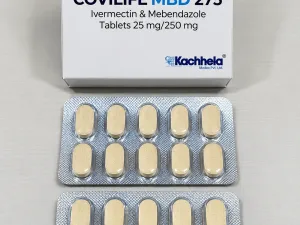





















What Are Ivermectin 40 mg Tablets?
this Tablets is an antiparasitic medicine used to treat certain infections caused by parasitic worms and other susceptible parasites.
It belongs to the avermectin class of medicines and acts primarily on specific nerve and muscle channels in susceptible invertebrates.
Ivermectin is used in human medicine for selected parasitic infections, including intestinal strongyloidiasis and onchocerciasis.
In certain countries and clinical settings, ivermectin may also be used for conditions such as scabies and other parasitic infestations.
The appropriate treatment depends on the parasite involved, the patient’s body weight, medical history, and the applicable treatment guidelines.
Unlike many medicines taken at the same dose every day, oral ivermectin is frequently prescribed using body-weight-based dosing, sometimes as a single dose or as part of a specific repeat-treatment schedule.
Therefore, tablet strength alone does not establish the correct dose.
A tablet labeled Ivermectin 40 mg Tablets contains a substantially larger amount of Ivermectin 40 mg Tablets than commonly marketed 3 mg human tablets in the United States.
Important: Ivermectin is not an antibiotic or a general-purpose antiviral medicine. It is not authorized or approved by the FDA to prevent or treat COVID-19, and available clinical evidence does not support using it for that purpose.
How Does Ivermectin Work?
1. Targets Susceptible Parasites
Ivermectin acts against certain parasitic organisms, including susceptible nematodes and some ectoparasites.
2. Affects Glutamate-Gated Chloride Channels
It binds to glutamate-gated chloride channels in the nerve and muscle cells of susceptible invertebrates.
3. Increases Chloride Ion Movement
This action increases chloride ion permeability across the cell membrane.
4. Disrupts Parasite Nerve Signaling
The resulting changes in membrane electrical activity interfere with normal nerve and muscle function.
5. Causes Paralysis of Susceptible Parasites
Affected parasites may become paralyzed and lose the ability to maintain normal biological activity.
6. Supports Parasite Elimination
Depending on the infection, ivermectin may kill or impair susceptible parasites, allowing their numbers to decrease.
7. Helps Control Specific Parasitic Diseases
The clinical effect depends on the species of parasite and the stage of its life cycle.
Ivermectin is not effective against every parasite and may not eliminate every developmental stage.
Uses of Ivermectin
1. Intestinal Strongyloidiasis
Ivermectin is used to treat intestinal strongyloidiasis caused by Strongyloides stercoralis.
Strongyloidiasis is a parasitic infection that can affect the gastrointestinal tract and may become severe in immunocompromised individuals.
Treatment may require follow-up testing to confirm eradication.
2. Onchocerciasis
Ivermectin is used to treat onchocerciasis, also known as river blindness, caused by Onchocerca volvulus.
It reduces the number of microfilariae but does not reliably kill adult worms.
Repeat treatment may be required according to specialist guidance.
3. Scabies
Oral ivermectin is used for certain cases of scabies under clinical guidelines, although regulatory approval varies by country.
Scabies is caused by mites that burrow into the skin and produce itching and a characteristic rash.
Oral treatment may be considered when topical treatment is unsuitable or in selected severe cases.
4. Crusted Scabies
Crusted scabies is a severe, highly contagious form of scabies.
Treatment may require multiple ivermectin doses together with topical scabicides under specialist supervision.
5. Selected Parasitic Worm Infections
Ivermectin may be used for certain additional nematode infections under established treatment guidelines.
The effectiveness and dosing regimen depend on the parasite.
6. Selected Ectoparasitic Infestations
Ivermectin may be considered for certain ectoparasitic infestations when supported by clinical guidelines.
7. Public Health Parasite-Control Programs
Ivermectin is used in certain public health programs to control specific parasitic diseases.
Such programs follow established population-level treatment protocols.
8. Other Specialist-Directed Parasitic Conditions
A specialist may prescribe ivermectin for selected off-label parasitic infections based on diagnosis and evidence-based guidance.
Important: The uses described above concern ivermectin as an active ingredient. They do not establish that a particular 40 mg tablet is approved, appropriate, or safe for those indications.
How to Take Ivermectin Tablets
Ivermectin should be taken only according to the instructions of a qualified healthcare professional.
General Administration Instructions
- Confirm that the product is approved or appropriately authorized for human use in the relevant country.
- Verify the active ingredient and tablet strength.
- Confirm the diagnosed parasitic infection.
- Follow the prescribed weight-based treatment regimen.
- Take the medicine according to the specific product instructions.
- Do not divide or combine tablets to estimate a dose without professional guidance.
- Do not repeat treatment unless instructed.
- Inform the prescriber about other medicines and medical conditions.
- Monitor for adverse reactions.
- Complete recommended follow-up examinations or laboratory tests.
Dosage Information
Oral ivermectin dosing varies by indication and body weight.
For example, commonly used human treatment regimens include approximately:
| Condition | Common Reference Regimen |
|---|---|
| Intestinal Strongyloidiasis | Approximately 200 micrograms/kg orally, with treatment duration and follow-up determined by clinical guidance |
| Onchocerciasis | Approximately 150 micrograms/kg orally, with repeat treatment as directed |
| Classic Scabies | Commonly 200 micrograms/kg per dose, repeated according to clinical guidance |
These are reference regimens for ivermectin, not instructions for taking a 40 mg tablet.
For perspective, 40 mg is equivalent to 40,000 micrograms. It must not be assumed to represent a standard single dose for an adult.
Do not take a Ivermectin 40 mg Tablets without a verified prescription specifying that exact dose and product.
Should Ivermectin Be Taken With Food?
Food instructions depend on the product label and indication.
For FDA-approved oral ivermectin used for strongyloidiasis or onchocerciasis, the prescribing information generally directs administration on an empty stomach with water.
Some other treatment protocols use different instructions.
Follow the directions for the specific product and indication.
Can Ivermectin Be Taken Daily?
Ivermectin is not routinely taken every day for all parasitic infections.
Treatment may involve a single dose, repeated doses, or a specialist-directed regimen.
Do not use it daily unless explicitly prescribed.
Missed Dose
Follow the prescriber’s instructions if a scheduled dose is missed.
Do not double the dose.
How Long Does Ivermectin Take to Work?
Ivermectin begins acting on susceptible parasites after administration.
However, the time required for symptom improvement depends on the infection.
For strongyloidiasis, treatment success may require follow-up stool examinations or other testing.
For scabies, itching may continue for several weeks even after successful parasite treatment because the skin’s inflammatory response can persist.
For onchocerciasis, treatment reduces microfilarial burden, but repeated treatment may be required.
Important: Symptom improvement alone does not always confirm complete eradication of the infection.
Common Side Effects
Possible side effects include:
- Nausea
- Diarrhea
- Abdominal discomfort
- Dizziness
- Headache
- Fatigue
- Mild skin rash
- Itching
- Joint discomfort
- Muscle discomfort
Some reactions are related to the body’s inflammatory response to dying parasites rather than direct medication toxicity.
The type and frequency of adverse effects depend on the infection being treated.
Serious Side Effects
Seek urgent medical attention if you experience:
- Severe confusion
- Loss of consciousness
- Seizures
- Severe dizziness or difficulty walking
- Severe allergic reactions
- Significant breathing difficulties
- Severe skin reactions
- Marked visual disturbances
- Severe low blood pressure
Important Serious Adverse Reactions
Neurological Toxicity: Serious neurological reactions, including altered consciousness, seizures, and coma, have been reported, particularly with excessive exposure or susceptible patients.
Mazzotti-Type Reactions: Patients treated for onchocerciasis may experience inflammatory reactions caused by dying microfilariae.
Severe Loa loa-Associated Encephalopathy: Patients with heavy Loa loa infection may develop severe neurological complications after ivermectin treatment.
Severe Skin Reactions: Rare but serious skin reactions may occur.
Hypotension: Low blood pressure may occur, particularly during inflammatory treatment reactions.
Overdose Toxicity: Excessive ivermectin exposure may cause serious neurological, cardiovascular, and gastrointestinal effects.
Contraindications & Precautions
1. Allergy to Ivermectin
Patients with known hypersensitivity to ivermectin or formulation ingredients should not take the medicine.
2. Unverified 40 mg Products
Do not use a product labeled 40 mg without confirming its human-use authorization, manufacturer, and authenticity.
3. Veterinary Formulations
Veterinary ivermectin products must not be used as substitutes for human medicines.
4. Liver Disease
Patients with significant liver disease should inform their prescriber before treatment.
5. Neurological Disorders
Patients with neurological conditions require careful assessment because serious neurological adverse reactions are possible.
6. Loa loa Coinfection
Patients with possible exposure to Loa loa, particularly in endemic regions of Central Africa, may require evaluation before ivermectin treatment.
7. Onchocerciasis-Related Reactions
Patients with onchocerciasis may develop inflammatory reactions after treatment.
8. Pregnancy
Use during pregnancy requires individualized medical assessment.
Human pregnancy safety data are limited.
9. Breastfeeding
Ivermectin passes into breast milk in small amounts.
Treatment decisions should consider maternal benefits and potential infant risks.
10. Children
Safety and effectiveness of oral ivermectin have not been established under FDA labeling for children weighing less than 15 kg.
11. Older Adults
Older adults may require additional assessment because of coexisting illnesses and concurrent medicines.
12. Immunocompromised Patients
Patients with impaired immunity may require more extensive treatment and follow-up for certain infections.
13. Medication Interactions
Potential interactions include:
- Warfarin
- Certain medicines affecting drug transport proteins
- Certain strong metabolic enzyme inhibitors
- Other medicines with central nervous system effects
Patients should provide their prescriber with a complete medication list.
14. Alcohol
Patients should discuss alcohol consumption with their healthcare professional, particularly if they experience dizziness or other neurological symptoms.
15. Driving and Machinery
Avoid driving or operating machinery if dizziness, confusion, or impaired coordination occurs.
16. Repeated Treatment
Repeated ivermectin doses should follow the infection-specific treatment schedule.
17. Unapproved Uses
Ivermectin should not be used for COVID-19, cancer, or other unsupported indications based on unverified online claims.
18. Medical Monitoring
Depending on the condition, healthcare professionals may monitor:
- Clinical symptoms
- Parasite testing
- Treatment response
- Neurological symptoms
- Skin reactions
- Liver function when indicated
- Blood pressure
- Medication interactions
- Follow-up testing
- Need for additional treatment
Advantages
- Established antiparasitic activity against selected susceptible organisms.
- Used in the treatment of intestinal strongyloidiasis.
- Used in the treatment of onchocerciasis.
- May be used for certain scabies cases under clinical guidance.
- Available in oral formulations.
- Often administered using relatively short treatment regimens.
- Can be used in selected public health parasite-control programs.
- Has well-established clinical applications for specific parasitic infections.
- May reduce parasite burden and related symptoms when appropriately prescribed.
- Can be incorporated into specialist-directed treatment plans.
Disadvantages / Limitations
- Not effective against every parasite.
- Requires accurate diagnosis.
- Dosing depends on body weight and indication.
- A 40 mg human tablet requires regulatory and manufacturer verification.
- May cause nausea.
- May cause diarrhea.
- May cause dizziness.
- May cause skin reactions.
- May cause neurological adverse effects.
- May cause serious complications in patients with heavy Loa loa infection.
- May require repeat treatment.
- May require follow-up parasite testing.
- Requires caution during pregnancy.
- Has limited safety data in children weighing less than 15 kg.
- May interact with other medicines.
- Does not reliably kill adult Onchocerca worms.
- Is not an approved treatment for COVID-19.
- Excessive doses can cause serious toxicity.
Important Notes
Generic Name: Ivermectin.
Active Ingredient: Ivermectin.
Requested Strength: 40 mg per tablet.
Strength Verification: Not a standard FDA-approved human oral tablet strength in the United States.
Dosage Form: Oral Tablet, subject to product verification.
Drug Class: Avermectin Anthelmintic.
Therapeutic Category: Antiparasitic Medicine.
Primary Uses: Strongyloidiasis and onchocerciasis.
Other Uses: Selected parasitic infestations under clinical guidance.
Mechanism of Action: Activity at glutamate-gated chloride channels in susceptible parasites.
Administration Route: Oral.
Dosage: Body-weight-based and indication-specific.
Overdose Warning: Excessive doses may cause serious neurological toxicity.
Pregnancy Precaution: Requires individualized medical assessment.
Child Safety Precaution: Human oral use in children weighing less than 15 kg requires specialist assessment.
Regulatory Precaution: Verify the specific 40 mg product before marketing or dispensing.
Storage: Follow manufacturer instructions.
Frequently Asked Questions
1. What are Ivermectin 40 mg Tablets used for?
Ivermectin is used for selected parasitic infections, including strongyloidiasis and onchocerciasis. A specific 40 mg tablet must be verified before use.
2. What is the active ingredient in Ivermectin 40 mg Tablets?
The stated active ingredient is ivermectin 40 mg per tablet, subject to manufacturer verification.
3. Is Ivermectin an antiparasitic medicine?
Yes. Ivermectin belongs to the avermectin class of antiparasitic medicines.
4. Is Ivermectin 40 mg a standard human tablet strength?
No. In the United States, FDA-approved oral ivermectin tablets for human use are available in 3 mg strength. A 40 mg product requires careful verification.
5. How does Ivermectin work?
It affects glutamate-gated chloride channels in susceptible parasites, disrupting nerve and muscle activity.
6. Can Ivermectin treat strongyloidiasis?
Yes. Ivermectin is an established treatment for intestinal strongyloidiasis.
7. Can Ivermectin treat onchocerciasis?
Yes. Ivermectin is used to reduce microfilariae associated with onchocerciasis.
8. Can Ivermectin treat scabies?
Oral ivermectin is used for certain scabies cases under clinical guidelines, although approval varies by country.
9. Is Ivermectin an antibiotic?
No. Ivermectin is an antiparasitic medicine, not an antibiotic for bacterial infections.
10. Can Ivermectin treat COVID-19?
No. Ivermectin is not FDA-approved or authorized for treating or preventing COVID-19, and clinical evidence does not support its use for this purpose.
