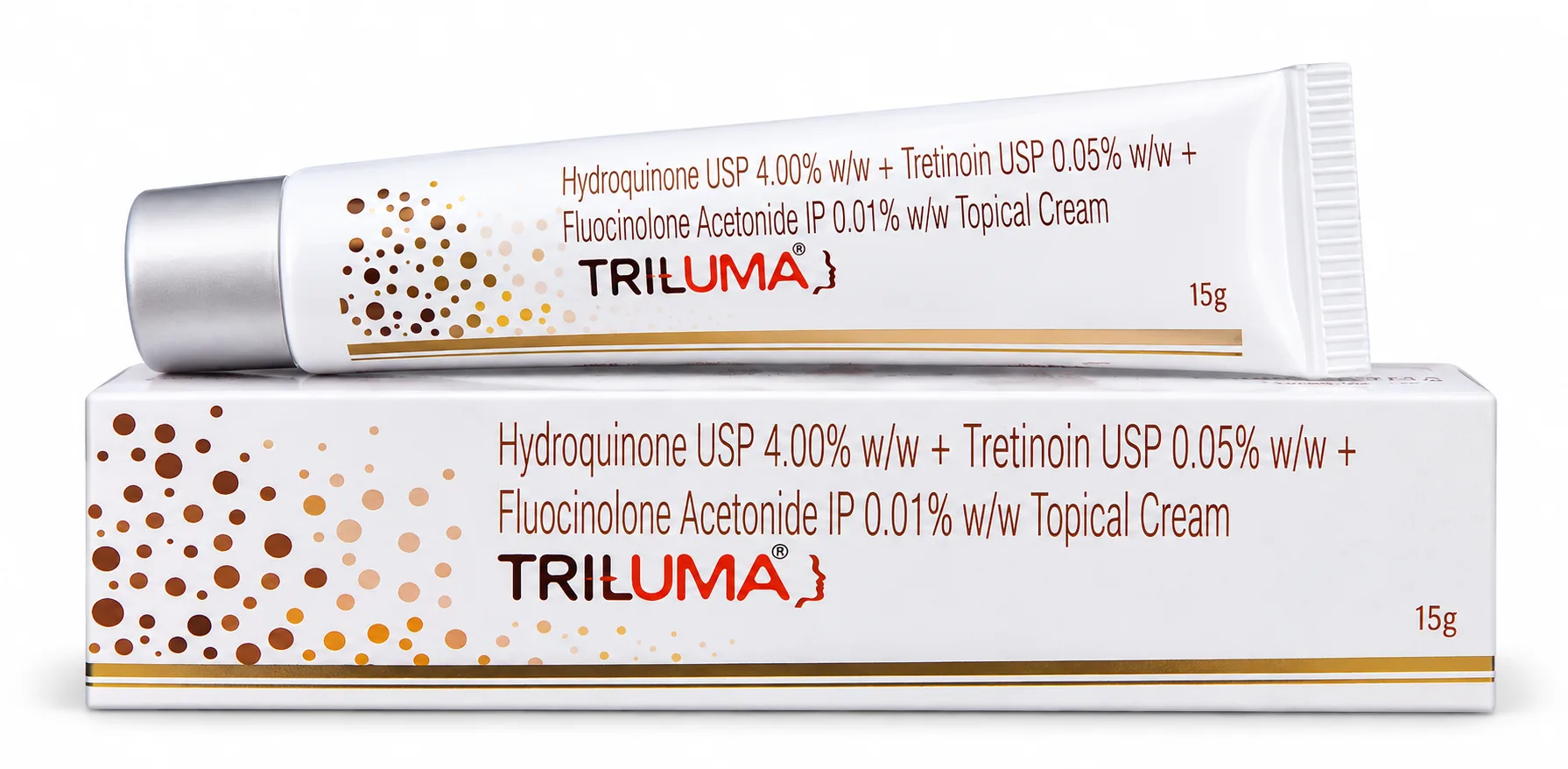
Tri-Luma is a prescription skin cream commonly used for the short-term treatment of moderate-to-severe facial melasma. It combines three active ingredients: fluocinolone acetonide, hydroquinone, and tretinoin.
Product Information
Product Name
Tri-Luma Cream
Active Ingredients
Fluocinolone Acetonide + Hydroquinone + Tretinoin
Strength
0.01% / 4% / 0.05%
Dosage Form
Topical Cream
Route of Administration
Topical
Therapeutic Class
Corticosteroid + Depigmenting Agent + Retinoid
Category
Dermatology / Melasma Treatment
Prescription Status
Prescription medicine
Packaging
Confirm the pack size from the specific product label
The standard Tri-Luma formulation contains fluocinolone acetonide 0.01%, hydroquinone 4%, and tretinoin 0.05%.
What Is Tri-Luma Cream?
Tri-Luma Cream is a combination medicine used for the short-term treatment of moderate-to-severe melasma on the face. Melasma causes brown or gray-brown patches of pigmentation, often on the cheeks, forehead, and upper lip.
How Does Tri-Luma Work?
The three ingredients work together:
Fluocinolone acetonide: A corticosteroid that helps reduce inflammation and irritation.
Hydroquinone: Reduces melanin production, helping lighten areas of excess pigmentation.
Tretinoin: A retinoid that promotes skin-cell turnover and helps improve the penetration of hydroquinone.
The combination helps reduce the appearance of melasma, although pigmentation may return after treatment stops.
How to Use Tri-Luma Cream
Use only under a dermatologist’s supervision.
Apply a thin layer to the affected facial areas as prescribed.
The official product instructions specify application once daily, at least 30 minutes before bedtime.
Avoid contact with the eyes, lips, and mucous membranes.
Use broad-spectrum sunscreen with SPF 30 or higher and protective clothing during the day.
Stop treatment as directed by your dermatologist; it is not intended for continuous maintenance treatment. DailyMed+1
Common Side Effects
Possible side effects include:
Redness
Skin peeling
Dryness
Burning or stinging
Itching
Skin irritation
Serious Side Effects
Seek medical advice if you experience:
Severe or persistent skin inflammation
Significant allergic reactions
Unusual blue-black darkening of the skin
Skin thinning or other changes associated with corticosteroid exposure
Symptoms suggesting an allergic reaction to sulfites
Hydroquinone can cause a condition called exogenous ochronosis, which produces blue-black skin discoloration.
Contraindications & Precautions
Consult your dermatologist before using Tri-Luma if you:
Are pregnant, planning pregnancy, or breastfeeding
Have a known allergy to any ingredient
Have sensitive, damaged, or severely irritated skin
Use other prescription skin treatments or exfoliating products
Have previously experienced reactions to hydroquinone or topical corticosteroids
Do not use Tri-Luma as a general skin-whitening cream or for prolonged self-directed use. Its corticosteroid component can cause adverse skin effects when misused.
Advantages
Combines three complementary active ingredients
Helps reduce facial melasma and uneven pigmentation
May improve the appearance of dark patches with appropriate use
Provides a targeted, prescription-based treatment option
Disadvantages / Limitations
May cause dryness, peeling, redness, and irritation
Requires sun protection throughout treatment
Is intended for short-term use rather than maintenance
Melasma can recur after treatment ends
Prolonged or inappropriate use can cause skin complications
Important Notes
Tri-Luma Cream should be used according to a dermatologist’s instructions. The official U.S. product information specifies short-term treatment, up to eight weeks, for moderate-to-severe facial melasma. The appropriate treatment duration may differ for other products or markets.
Frequently Asked Questions
What is Tri-Luma Cream used for?
It is used for the short-term treatment of moderate-to-severe facial melasma.
Does Tri-Luma contain a steroid?
Yes. It contains fluocinolone acetonide, a topical corticosteroid, alongside hydroquinone and tretinoin.
Can Tri-Luma be used daily?
The standard product instructions specify once-daily evening application during the prescribed treatment period. Follow your dermatologist’s directions.
Can Tri-Luma be used for a long time?
It is not intended for continuous maintenance treatment. Prolonged use may increase the risk of adverse effects.
Is sunscreen necessary while using Tri-Luma?
Yes. Sun avoidance and sunscreen are important because sunlight can worsen melasma and undermine treatment results.
Additional information
Quantity Value
3 Tube/s, 10 Tube/s, 20 Tube/s, 5 Tube/s
Reviews
There are no reviews yet.
Be the first to review “Triluma Cream” Cancel reply




DailyMed+1


Reviews
There are no reviews yet.