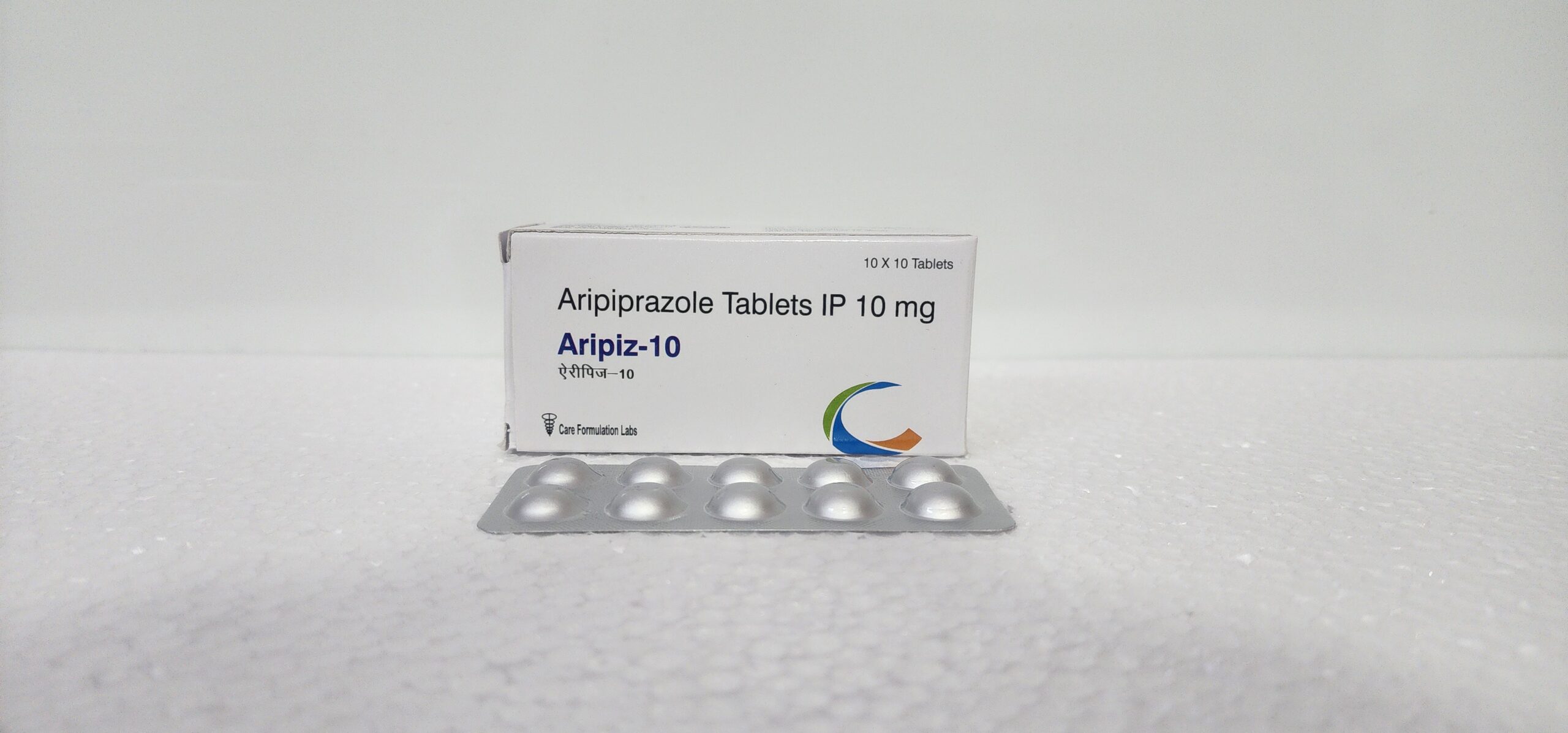
What Are Aripiprazole 10 mg Tablets?
Aripiprazole 10 mg Tablets are prescription psychiatric medicines containing aripiprazole, a second-generation or atypical antipsychotic used to manage certain mental health conditions.
Aripiprazole acts on neurotransmitter systems in the brain, particularly dopamine and serotonin signaling pathways.
These neurotransmitters are involved in regulating mood, behavior, perception, motivation, and emotional responses.
Aripiprazole has a distinctive pharmacological profile because it acts as a partial agonist at certain dopamine and serotonin receptors rather than functioning solely as a receptor blocker.
This activity helps regulate neurotransmitter signaling associated with psychiatric symptoms.
Aripiprazole may be prescribed for:
- Schizophrenia
- Bipolar I disorder
- Manic episodes
- Mixed episodes associated with bipolar I disorder
- Maintenance treatment of bipolar I disorder
- Adjunctive treatment of major depressive disorder
- Irritability associated with autistic disorder in approved pediatric populations
- Tourette’s disorder in approved age groups
Not every indication is approved for every age group, dose, or country.
Aripiprazole may help reduce symptoms such as hallucinations, delusions, disorganized thinking, manic behavior, mood instability, and certain behavioral disturbances.
Important: Aripiprazole is not a permanent cure for psychiatric conditions. It is a prescription medicine that should be used under the supervision of a qualified healthcare professional.
How Do Aripiprazole 10 mg Tablets Work?
1. Modulate Dopamine Activity
Aripiprazole acts as a partial agonist at dopamine D2 receptors.
This means it can influence dopamine receptor activity differently depending on the existing level of dopamine signaling.
2. Influence Serotonin Receptors
Aripiprazole acts as a partial agonist at serotonin 5-HT1A receptors and an antagonist at serotonin 5-HT2A receptors.
These actions contribute to its effects on mood, behavior, and psychiatric symptoms.
3. Help Manage Psychotic Symptoms
By modifying dopamine and serotonin signaling, aripiprazole may reduce hallucinations, delusions, and disorganized thinking associated with schizophrenia.
4. Support Mood Stabilization
Aripiprazole may help manage manic and mixed episodes associated with bipolar I disorder.
5. Reduce the Risk of Mood Episode Recurrence
Maintenance treatment may help delay the recurrence of manic or mixed episodes in appropriately selected patients.
6. Support Adjunctive Depression Treatment
When added to an antidepressant, aripiprazole may improve depressive symptoms in certain adults with major depressive disorder who have had an inadequate response to antidepressant treatment alone.
7. Help Manage Selected Behavioral Symptoms
Aripiprazole may reduce certain behavioral symptoms associated with autistic disorder or Tourette’s disorder when prescribed for approved age groups and indications.
Uses of Aripiprazole 10 mg Tablets
1. Schizophrenia
Aripiprazole is used to treat schizophrenia, a psychiatric disorder that can affect thinking, perception, emotions, and behavior.
It may help manage:
- Hallucinations
- Delusions
- Disorganized thinking
- Agitation associated with psychosis
- Certain behavioral disturbances
2. Bipolar I Disorder
Aripiprazole may be prescribed for bipolar I disorder, particularly for the treatment of manic or mixed episodes.
3. Acute Manic Episodes
It may help reduce symptoms such as:
- Elevated or irritable mood
- Increased activity
- Reduced need for sleep
- Racing thoughts
- Impulsive behavior
- Excessive energy
4. Maintenance Treatment of Bipolar I Disorder
Aripiprazole may be used as maintenance treatment to help delay the recurrence of manic or mixed episodes.
5. Adjunctive Treatment of Major Depressive Disorder
Aripiprazole may be added to antidepressant therapy in selected adults with major depressive disorder who have not responded adequately to antidepressant treatment alone.
It is not generally used as standalone treatment for major depressive disorder.
6. Irritability Associated With Autistic Disorder
Aripiprazole is approved in some countries for irritability associated with autistic disorder in specified pediatric age groups.
Treatment may address symptoms such as aggression, severe tantrums, and self-injurious behavior.
7. Tourette’s Disorder
Aripiprazole may be prescribed to manage motor and vocal tics associated with Tourette’s disorder in approved age groups.
8. Individualized Psychiatric Treatment
A psychiatrist may consider aripiprazole for other clinical situations when supported by evidence and appropriate medical judgment.
Such uses may be off-label and require individualized assessment.
Important: Aripiprazole 10 mg should not be assumed to be the correct starting dose for every condition or patient.
How to Take Aripiprazole 10 mg Tablets
Aripiprazole should be taken exactly as prescribed by a healthcare professional.
Step-by-Step Administration Instructions
- Read the prescription and medicine information leaflet.
- Take the tablet at the time recommended by your healthcare professional.
- Swallow the tablet with water.
- Aripiprazole tablets can generally be taken with or without food.
- Take the medicine consistently according to the prescribed schedule.
- Do not increase or reduce the dose independently.
- Do not stop treatment suddenly without medical advice.
- Attend scheduled psychiatric follow-up appointments.
- Report unusual behavioral changes or side effects.
- Keep the medicine away from children.
Dosage Information
The prescribed dose depends on:
- Psychiatric diagnosis
- Patient’s age
- Severity of symptoms
- Previous treatment response
- Other medicines
- Liver function
- CYP2D6 metabolizer status
- Potential drug interactions
- Tolerability
- Clinical response
For adults with schizophrenia, 10–15 mg once daily is a commonly recommended starting and target dose in some prescribing information.
However, other indications may require different starting doses.
For example, adjunctive treatment of major depressive disorder often begins at a lower dose.
The appropriate dosage must be determined by the prescribing healthcare professional.
Missed Dose
If a dose is missed, follow the instructions provided by the prescribing healthcare professional or medicine leaflet.
Do not take a double dose to compensate for a missed tablet.
Important Administration Instructions
- Take only as prescribed.
- Do not exceed the recommended dose.
- Avoid sudden discontinuation without medical advice.
- Avoid alcohol unless your healthcare professional advises otherwise.
- Use caution when driving until you understand how the medicine affects you.
- Inform your healthcare professional about all other medicines.
- Report unusual restlessness, involuntary movements, or behavioral changes.
- Attend recommended metabolic and clinical monitoring appointments.
How Long Does Aripiprazole 10 mg Take to Work?
Aripiprazole begins affecting neurotransmitter receptors after administration, but noticeable clinical improvement may take time.
Some symptoms, such as agitation or sleep disturbance, may improve within several days.
Other symptoms may take several weeks to respond.
The full response to antipsychotic treatment may require several weeks or longer.
Treatment response depends on:
- Psychiatric diagnosis
- Symptom severity
- Prescribed dose
- Medication adherence
- Individual metabolism
- Concurrent treatment
- Previous medication response
Patients should not independently discontinue treatment if improvement is not immediate.
Common Side Effects
Possible side effects include:
- Restlessness
- Akathisia (an uncomfortable need to move)
- Nausea
- Vomiting
- Constipation
- Headache
- Dizziness
- Sleepiness
- Insomnia
- Anxiety
- Fatigue
- Tremor
- Blurred vision
- Increased appetite
- Weight changes
- Mild movement-related symptoms
The likelihood of individual side effects varies with the dose, indication, age, and concurrent medicines.
Serious Side Effects
Seek urgent medical attention if you experience:
- High fever with severe muscle stiffness
- Confusion or altered consciousness
- Severe involuntary movements
- Seizures
- Severe allergic reactions
- Difficulty swallowing
- Fainting or severe dizziness
- Severe changes in blood glucose
- Significant behavioral changes
- Suicidal thoughts or behaviors
Rare or clinically important complications may include:
- Neuroleptic malignant syndrome
- Tardive dyskinesia
- Severe akathisia
- Extrapyramidal symptoms
- Hyperglycemia and diabetes-related complications
- Orthostatic hypotension
- Seizures
- Leukopenia or neutropenia
- Difficulty regulating body temperature
- Impulse-control problems
- Increased risk of death in elderly patients with dementia-related psychosis
Important: Aripiprazole is not approved for the treatment of dementia-related psychosis in elderly patients because antipsychotics are associated with increased mortality in this population.
Contraindications & Precautions
1. Allergy to Aripiprazole
Patients with known hypersensitivity to aripiprazole or other tablet ingredients should not take the medicine.
2. Dementia-Related Psychosis
Aripiprazole is not approved for treating dementia-related psychosis in elderly patients.
Antipsychotic medicines are associated with increased mortality in this population.
3. Suicidal Thoughts and Behavioral Changes
Patients receiving aripiprazole as adjunctive treatment for depression require monitoring for worsening depression, suicidal thoughts, or unusual behavioral changes.
This is particularly important in younger patients.
4. Neuroleptic Malignant Syndrome
This rare but potentially life-threatening reaction may cause fever, severe muscle stiffness, confusion, and autonomic instability.
Immediate medical attention is required.
5. Tardive Dyskinesia
Long-term antipsychotic treatment may cause involuntary movements, which can sometimes persist after the medicine is stopped.
6. Akathisia
Aripiprazole may cause significant inner restlessness and an urge to move.
Patients should report these symptoms promptly.
7. Diabetes and Blood Glucose
Atypical antipsychotics may affect glucose regulation.
Patients with diabetes or risk factors for diabetes may require blood glucose monitoring.
8. Weight and Metabolic Health
Weight, blood glucose, and lipid levels may require periodic monitoring.
9. Cardiovascular Conditions
Aripiprazole may cause orthostatic hypotension and dizziness.
Patients with cardiovascular disease or conditions that predispose them to low blood pressure should use caution.
10. Seizure Disorders
Patients with epilepsy or a history of seizures should inform their healthcare professional.
11. Impulse-Control Problems
Aripiprazole has been associated with compulsive behaviors, including gambling, shopping, eating, and sexual urges.
Patients and caregivers should report new or unusual impulses.
12. Pregnancy and Breastfeeding
Use during pregnancy requires individualized medical assessment.
Exposure to antipsychotics during the third trimester may cause extrapyramidal or withdrawal symptoms in newborns.
Aripiprazole can pass into breast milk and may reduce milk production.
13. Pediatric Use
Use in children depends on the specific diagnosis, approved age range, and prescribed dosage.
Pediatric patients require careful monitoring.
14. Medication Interactions
Potentially relevant medicines include:
- Fluoxetine
- Paroxetine
- Bupropion
- Ketoconazole
- Itraconazole
- Clarithromycin
- Carbamazepine
- Rifampin
- Other antipsychotic medicines
- Sedatives
- Certain blood pressure medicines
- Other medicines affecting CYP2D6 or CYP3A4 metabolism
Strong CYP2D6 or CYP3A4 inhibitors may increase aripiprazole exposure, while strong CYP3A4 inducers may reduce it.
Dose adjustments may be necessary.
15. Medical Monitoring
Healthcare professionals may monitor:
- Psychiatric symptoms
- Treatment response
- Weight and body mass index
- Blood glucose
- Lipid profile
- Blood pressure
- Movement disorders
- Akathisia
- Suicidal thoughts
- Impulse-control changes
- Medication adherence
- Adverse effects
Advantages
- Contains aripiprazole 10 mg.
- Classified as a second-generation antipsychotic.
- Helps manage symptoms of schizophrenia