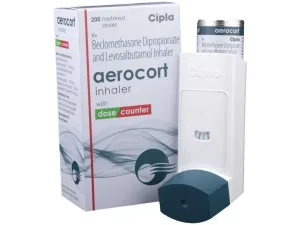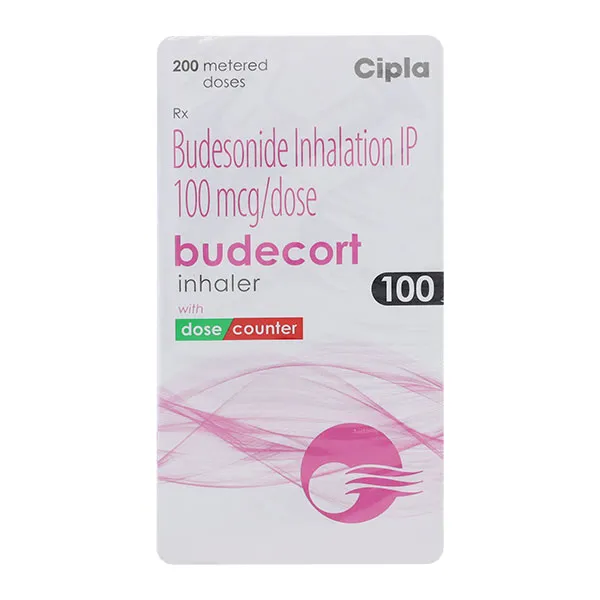
Important: Budesonide Inhaler 100 mcg is an inhaled corticosteroid used for long-term control of asthma-related airway inflammation. It is not a rapid-relief inhaler and should not be used as the sole treatment for sudden asthma attacks.
The term 100 commonly refers to 100 micrograms of budesonide per actuation, but the exact delivered or metered dose and inhaler type must be verified from the product packaging.
What Is Budesonide Inhaler 100 mcg?
Budesonide Inhaler 100 mcg is a prescription respiratory medicine containing budesonide, a synthetic corticosteroid with anti-inflammatory activity.
It belongs to the inhaled corticosteroid class of medicines commonly used for the maintenance treatment of bronchial asthma.
Asthma is a chronic inflammatory disease affecting the airways.
During asthma, the bronchial passages become inflamed and overly sensitive to environmental and biological triggers.
These triggers may include dust, pollen, smoke, pollution, respiratory infections, cold air, exercise and allergens.
Airway inflammation can cause swelling, increased mucus production and narrowing of the bronchial passages.
This may result in symptoms such as:
- Wheezing
- Persistent coughing
- Chest tightness
- Shortness of breath
- Night-time coughing
- Difficulty breathing during physical activity
Budesonide helps control these symptoms by reducing inflammation within the respiratory tract.
When inhaled, budesonide acts primarily in the airways, where it influences inflammatory cells and chemical mediators involved in asthma.
Regular treatment may improve asthma control, reduce symptom frequency and lower the risk of asthma exacerbations.
Unlike short-acting bronchodilators, budesonide does not directly relax airway smooth muscles to provide immediate relief.
Therefore, it is considered a controller or preventer medicine, rather than a rapid-relief bronchodilator.
Budesonide may be prescribed alone or as part of a broader asthma management plan.
Some patients may also require a separate reliever inhaler or an inhaled corticosteroid–formoterol combination, depending on the treatment regimen.
Important: Budesonide-only inhalers and budesonide–formoterol combination inhalers are different products and should not be considered interchangeable.
How Does Budesonide Inhaler 100 mcg Work?
1. Delivers Medicine to the Airways
The inhaler delivers budesonide into the respiratory tract.
The amount reaching the lungs depends on the device and inhalation technique.
2. Activates Glucocorticoid Receptors
Budesonide enters airway cells and binds to intracellular glucocorticoid receptors.
3. Reduces Inflammatory Mediators
Activated glucocorticoid receptors influence gene expression and suppress the production of several inflammatory substances.
4. Reduces Airway Swelling
Budesonide helps decrease swelling and inflammation in the bronchial passages.
5. Suppresses Inflammatory Cell Activity
It reduces the activity of inflammatory cells involved in asthma, including eosinophils and other immune cells.
6. Reduces Airway Hyperresponsiveness
Regular treatment can decrease excessive airway sensitivity to asthma triggers.
7. Helps Control Mucus-Related Inflammation
Budesonide may reduce inflammatory processes that contribute to excessive mucus production.
8. Supports Long-Term Asthma Control
Continued treatment may improve lung function, reduce symptoms and lower the risk of exacerbations.
Important: Budesonide does not provide immediate bronchodilation. Its therapeutic benefit develops with regular use.
Uses of Budesonide Inhaler 100 mcg
1. Maintenance Treatment of Asthma
Budesonide is used as a regular controller medicine for patients with asthma.
2. Control of Airway Inflammation
It reduces chronic inflammation within the bronchial passages.
3. Prevention of Asthma Symptoms
Regular treatment may reduce the frequency of wheezing, coughing and chest tightness.
4. Reduction of Asthma Exacerbations
Inhaled corticosteroid treatment reduces the risk of asthma flare-ups when used appropriately.
5. Persistent Asthma Management
Budesonide may be prescribed for patients with persistent asthma requiring regular anti-inflammatory treatment.
6. Night-Time Asthma Symptom Control
Improved airway inflammation control may reduce night-time coughing and wheezing.
7. Exercise-Related Asthma Symptom Prevention
Regular asthma controller treatment may reduce exercise-related symptoms associated with airway inflammation.
However, budesonide alone is not an immediate pre-exercise bronchodilator.
8. Reduction of Airway Hyperresponsiveness
Budesonide helps decrease the sensitivity of the airways to certain asthma triggers.
9. Pediatric Asthma Maintenance
Certain budesonide inhaler formulations are approved for children within specific age ranges.
Pediatric use depends on the device, strength and prescribing information.
10. Long-Term Respiratory Disease Control
Budesonide may be included in an individualized long-term asthma management plan.
Important: Budesonide-only inhalers should not be promoted as immediate rescue treatment, a permanent cure for asthma or a universal treatment for every respiratory condition.
How to Use Budesonide Inhaler 100 mcg
Budesonide inhalers are available in different device types.
The exact technique depends on whether the product is a pressurized metered-dose inhaler, breath-actuated inhaler or dry powder inhaler.
General Administration Instructions
- Confirm the inhaler name, strength and device type.
- Read the manufacturer’s instructions before first use.
- Prepare or prime the inhaler if required.
- Exhale gently away from the mouthpiece.
- Position the inhaler correctly.
- Place the mouthpiece between the lips.
- Inhale using the technique recommended for the device.
- Hold the breath briefly if comfortable.
- Exhale gently.
- Repeat only if another inhalation has been prescribed.
- Rinse the mouth and spit out the water after use.
- Clean and store the inhaler according to its instructions.
Dosage Information
| Dosage Detail | General Guidance |
|---|---|
| Strength | 100 mcg per Actuation, Subject to Verification |
| Route | Oral Inhalation |
| Typical Administration | Regular Maintenance Treatment |
| Frequency | Often Twice Daily, Depending on Product and Prescription |
| Adult Dose | Based on Asthma Severity and Clinical Response |
| Pediatric Dose | Age- and Product-Specific |
| Dose Adjustment | Based on Asthma Control |
| Treatment Duration | Determined by the Prescriber |
| Missed Dose | Follow Product Instructions; Do Not Double |
| Monitoring | Symptoms, Lung Function, Exacerbations and Adverse Effects |
Important: The 100 mcg strength refers to an individual inhalation dose, not necessarily the total prescribed daily dose.
Can Budesonide Inhaler Be Used Daily?
Yes. Budesonide is generally used regularly as maintenance treatment.
Can Budesonide Be Used During an Asthma Attack?
Budesonide alone is not intended for immediate relief of sudden bronchospasm.
Patients should follow their prescribed asthma action plan.
Can Budesonide Be Used With Salbutamol?
Yes, when prescribed.
Salbutamol is a short-acting bronchodilator, while budesonide is an anti-inflammatory controller medicine.
Should the Mouth Be Rinsed After Using Budesonide?
Yes.
Rinsing the mouth and spitting out the water helps reduce the risk of oral candidiasis.
Can Budesonide Be Stopped When Symptoms Improve?
Do not stop prescribed maintenance treatment independently.
Asthma symptoms may improve because airway inflammation is being controlled.
Can Budesonide Be Used With a Spacer?
A compatible spacer may be used with certain pressurized metered-dose inhalers.
Dry powder inhalers are not used with spacers.
What If a Dose Is Missed?
Follow the product-specific missed-dose instructions.
Do not double the dose.
What If Too Much Budesonide Is Used?
Excessive or prolonged corticosteroid exposure may increase the risk of systemic adverse effects.
Seek medical advice if an excessive amount has been used.
How Long Does Budesonide Inhaler 100 mcg Take to Work?
Budesonide begins exerting anti-inflammatory activity after inhalation, but improvement in asthma control develops gradually.
After the First Dose
Budesonide begins acting on inflammatory pathways within the airways.
During the First Several Days
Some patients may experience improvement in symptoms.
After One to Two Weeks
More noticeable improvement in asthma control may occur with consistent treatment.
During Continued Treatment
Maximum benefit may require several weeks, depending on the patient and disease severity.
Important: Budesonide does not provide immediate relief during an acute asthma attack.
Common Side Effects
Possible side effects include:
- Throat irritation
- Hoarseness
- Voice changes
- Oral thrush
- Cough after inhalation
- Dry throat
- Mild headache
- Mouth discomfort
- Unpleasant taste
- Mild respiratory irritation
The likelihood of adverse effects depends on the dose, duration and inhalation technique.
Serious Side Effects
Seek medical attention if any of the following occur:
- Sudden worsening of breathing after inhalation
- Severe allergic reactions
- Swelling of the face, lips or tongue
- Persistent oral fungal infections
- Unusual weakness or fatigue
- Significant visual changes
- Severe dizziness
- Symptoms suggesting adrenal insufficiency
- Recurrent or unusually severe infections
Important Serious Risks
Paradoxical Bronchospasm: Rarely, inhaled medicines may cause sudden worsening of breathing immediately after administration.
Adrenal Suppression: Prolonged high-dose corticosteroid exposure may suppress adrenal hormone production.
Growth Effects in Children: Long-term inhaled corticosteroid treatment may reduce growth velocity in some children.
Bone Mineral Density Reduction: High-dose or prolonged corticosteroid treatment may contribute to reduced bone density.
Cataracts and Glaucoma: Long-term corticosteroid exposure may increase the risk of certain eye complications.
Oral Candidiasis: Local fungal infection can occur, particularly when mouth rinsing is neglected.
Systemic Corticosteroid Effects: Excessive exposure may cause effects such as Cushingoid features and adrenal suppression.
Contraindications & Precautions
1. Allergy to Budesonide
Patients with known serious hypersensitivity to budesonide or formulation ingredients should not use the medicine.
2. Acute Asthma Attacks
Budesonide alone is not a rapid-relief treatment.
3. Status Asthmaticus
Severe asthma attacks require emergency medical treatment.
4. Respiratory Infections
Patients with active respiratory infections require appropriate clinical assessment.
5. Tuberculosis
Patients with active or previous pulmonary tuberculosis should inform their healthcare professional.
6. Fungal Infections
Inhaled corticosteroids can increase the risk of oral candidiasis.
7. Adrenal Suppression
High doses or prolonged treatment may suppress adrenal function.
8. Transition From Oral Corticosteroids
Patients switching from systemic corticosteroids to inhaled budesonide may require careful monitoring.
9. Pediatric Growth
Children receiving long-term inhaled corticosteroids should have growth monitored periodically.
10. Bone Health
Patients with osteoporosis or fracture risk factors may require additional assessment.
11. Eye Disorders
Patients with glaucoma, cataracts or new visual symptoms should inform their healthcare professional.
12. Liver Disease
Severe liver impairment may increase systemic budesonide exposure.
13. Pregnancy
Inhaled budesonide has substantial clinical experience in pregnancy.
Maintaining adequate asthma control is important, and treatment decisions should be made with a healthcare professional.
14. Breastfeeding
Inhaled budesonide is generally considered compatible with breastfeeding at usual therapeutic doses, subject to individual clinical assessment.
15. Drug Interactions
Budesonide is metabolized mainly through CYP3A4.
Strong CYP3A4 inhibitors may increase systemic exposure.
Examples include:
- Ketoconazole
- Itraconazole
- Clarithromycin
- Ritonavir
- Cobicistat-containing medicines
These combinations may increase the risk of systemic corticosteroid adverse effects.
16. Inhaler Technique
Incorrect inhalation technique may reduce treatment effectiveness.
17. Long-Term Corticosteroid Therapy
The lowest effective prescribed dose should be used to maintain asthma control.
18. Medical Monitoring
Healthcare professionals may assess:
- Asthma symptom frequency
- Night-time symptoms
- Rescue inhaler use
- Asthma exacerbations
- Lung function
- Peak expiratory flow when indicated
- Inhalation technique
- Treatment adherence
- Oral candidiasis
- Voice changes
- Throat irritation
- Growth in children
- Bone health when indicated
- Eye symptoms
- Adrenal function when indicated
- Medication interactions
- Need for dose adjustment
- Overall asthma control
Potential Therapeutic Advantages
- Inhaled Corticosteroid Therapy.
- Local Airway Anti-Inflammatory Action.
- Asthma Maintenance Treatment.
- Airway Inflammation Reduction.
- Wheezing Symptom Control.
- Reduced Airway Hyperresponsiveness.
- Potential Asthma Exacerbation Reduction.
- Long-Term Asthma Control.
- Multiple Inhaler Device Options.
- 100 mcg Strength.
- Individualized Dose Adjustment.
- Established Respiratory Treatment.
- Anti-Inflammatory Controller Therapy.
Disadvantages / Limitations
- Not a Rescue Inhaler.
- Does Not Provide Immediate Bronchodilation.
- May Cause Oral Thrush.
- May Cause Hoarseness.
- May Cause Throat Irritation.
- May Cause Cough After Inhalation.
- Requires Correct Inhaler Technique.
- Requires Regular Use.
- Potential Adrenal Suppression at High Exposure.
- Potential Growth Effects in Children.
- Potential Bone Density Reduction.
- Potential Cataract or Glaucoma Risk.
- Possible Drug Interactions.
- Does Not Permanently Cure Asthma.
- Not Suitable for Every Respiratory Condition.
Important Notes
Generic Name: Budesonide.
Strength: 100 mcg per Actuation, Subject to Verification.
Drug Class: Inhaled Corticosteroid.
Therapeutic Category: Respiratory Anti-Inflammatory Medicine.
Primary Use: Asthma Maintenance Treatment.
Mechanism of Action: Suppression of Airway Inflammation.
Route: Oral Inhalation.
Rescue Inhaler: No.
Bronchodilator: No.
Mouth Rinsing: Recommended.
Major Local Risk: Oral Candidiasis.
Long-Term Risk: Possible Systemic Corticosteroid Effects.
Pediatric Monitoring: Important.
Medical Supervision: Required.
Storage: Follow Manufacturer Instructions.
Frequently Asked Questions
1. What is Budesonide Inhaler 100 mcg used for?
It is used for the maintenance treatment of asthma and control of airway inflammation.
2. Is Budesonide a steroid inhaler?
Yes. Budesonide is an inhaled corticosteroid.
3. How does Budesonide work?
It suppresses inflammatory activity within the airways, helping reduce swelling and airway sensitivity.
4. Is Budesonide used for asthma?
Yes. It is an established controller treatment for asthma.
5. Can Budesonide stop an asthma attack immediately?
No. Budesonide alone does not provide rapid bronchodilation.
6. Can Budesonide Inhaler be used daily?
Yes. It is generally used regularly according to the prescribed maintenance regimen.
7. How long does Budesonide take to work?
Some improvement may occur within days, but full benefit may require several weeks.