






























































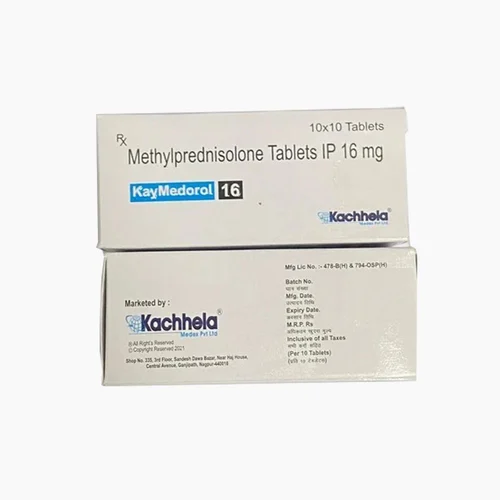
What Is Kaymedorol 16 mg?
Kaymedorol 16 mg (Methylprednisolone) is an oral corticosteroid medicine used to manage selected conditions involving inflammation, allergic responses or excessive immune-system activity.
Methylprednisolone is a synthetic glucocorticoid that acts similarly to naturally occurring corticosteroid hormones produced by the adrenal glands.
It works by binding to glucocorticoid receptors inside cells and influencing the expression of genes involved in inflammation and immune responses.
This process reduces the production and activity of several inflammatory mediators.
As a result, methylprednisolone may help reduce swelling, redness, pain and other symptoms associated with certain inflammatory disorders.
Methylprednisolone also suppresses aspects of immune-system activity, making it useful in selected autoimmune and immune-mediated conditions.
The medicine is prescribed for a range of disorders, including certain severe allergic conditions, rheumatic diseases, respiratory disorders, dermatological conditions and other corticosteroid-responsive illnesses.
However, its benefits must be balanced against potential adverse effects, particularly when high doses or prolonged treatment are required.
How Does Kaymedorol 16 mg Work?
1. Contains Methylprednisolone
Methylprednisolone is a synthetic glucocorticoid with anti-inflammatory and immunosuppressive properties.
2. Activates Glucocorticoid Receptors
After entering cells, methylprednisolone binds to intracellular glucocorticoid receptors.
3. Regulates Gene Expression
The activated receptor complex influences the transcription of genes involved in inflammatory and immune processes.
4. Reduces Inflammatory Mediators
Methylprednisolone suppresses the production and activity of several cytokines and other inflammatory substances.
5. Decreases Immune-Cell Activity
It reduces selected immune-cell responses involved in inflammation and autoimmune disease.
6. Helps Reduce Swelling
Suppression of inflammation can reduce tissue swelling and associated discomfort.
7. Helps Control Allergic Inflammation
Methylprednisolone may reduce inflammatory symptoms associated with certain allergic disorders.
8. Produces Systemic Effects
Because it is taken orally, methylprednisolone can affect multiple organs and physiological systems.
Uses of Kaymedorol 16 mg
1. Severe Allergic Conditions
Methylprednisolone may be prescribed for selected severe allergic disorders when systemic corticosteroid treatment is clinically appropriate.
It is not a substitute for epinephrine in anaphylaxis.
2. Rheumatoid Arthritis
Methylprednisolone may be used for short-term symptom control or selected disease-management situations involving rheumatoid arthritis.
It is not a replacement for disease-modifying antirheumatic drugs.
3. Systemic Lupus Erythematosus
It may be prescribed to control inflammatory and immune-mediated manifestations of lupus.
The dose and treatment duration depend on disease severity and organ involvement.
4. Asthma Exacerbations
Systemic corticosteroids may be used for moderate or severe asthma exacerbations to reduce airway inflammation.
They are not immediate-relief bronchodilators.
5. Chronic Obstructive Pulmonary Disease Exacerbations
Methylprednisolone may be used in selected acute COPD exacerbations according to clinical guidelines.
6. Inflammatory Skin Disorders
It may be prescribed for certain severe or extensive inflammatory skin conditions when topical treatment is insufficient.
7. Autoimmune Disorders
Methylprednisolone may be used in selected autoimmune diseases to suppress excessive immune activity.
8. Inflammatory Bowel Disease
Systemic corticosteroids may be used to induce remission during certain moderate or severe inflammatory bowel disease flare-ups.
They are not generally suitable for long-term maintenance of remission.
9. Selected Hematological Disorders
Methylprednisolone may be used for certain immune-mediated blood disorders, including selected cases of immune thrombocytopenia or autoimmune hemolytic anemia.
10. Other Corticosteroid-Responsive Conditions
Methylprednisolone may be prescribed for selected neurological, renal, ophthalmic or other inflammatory conditions under specialist supervision.
How to Take Kaymedorol 16 mg
Kaymedorol 16 mg should be taken according to a qualified healthcare professional’s prescription.
General Administration Instructions
- Confirm the prescribed dose and treatment duration.
- Take the medicine at the time recommended by the prescriber.
- Swallow the tablet with water unless the product instructions state otherwise.
- Taking the medicine with food or milk may help reduce stomach irritation.
- Do not increase or decrease the dose independently.
- Do not stop treatment abruptly when tapering is medically necessary.
- Inform the prescriber about diabetes, hypertension, infections or stomach ulcers.
Is Kaymedorol 16 mg Taken Once Daily?
Some methylprednisolone regimens involve once-daily administration.
Other conditions may require divided doses or specialized treatment schedules.
The correct frequency depends on the prescription.
Is 16 mg a High Dose of Methylprednisolone?
A 16 mg methylprednisolone dose is approximately equivalent in glucocorticoid anti-inflammatory potency to 20 mg of prednisone.
Whether this represents a low, moderate or high dose depends on the medical condition, treatment duration and patient characteristics.
Should Kaymedorol Be Taken With Food?
Taking methylprednisolone with food or milk may reduce gastrointestinal discomfort.
Can Kaymedorol Be Stopped Suddenly?
Abrupt discontinuation can be dangerous after sufficiently prolonged or intensive corticosteroid exposure because the body’s natural cortisol production may be suppressed.
A gradual dose reduction may be required.
Short courses do not always require tapering, but the decision should follow the prescribed regimen.
What If a Dose Is Missed?
Take the missed dose when remembered unless the next dose is nearly due.
Do not double the dose.
If taking an alternate-day or specialized corticosteroid regimen, contact the prescriber for specific instructions.
How Long Does Kaymedorol 16 mg Take to Work?
The onset of improvement depends on the condition being treated.
Within Several Hours
Methylprednisolone begins producing pharmacological effects after absorption.
Within One to Two Days
Some inflammatory symptoms may begin improving.
Over Several Days
More substantial symptom improvement may occur in certain corticosteroid-responsive conditions.
During Longer Treatment
Some autoimmune and inflammatory diseases require ongoing monitoring and treatment adjustments.
Important: Symptom improvement does not mean that the underlying disease has been cured.
Common Side Effects
Possible side effects include:
- Increased appetite
- Weight gain
- Nausea
- Stomach irritation
- Difficulty sleeping
- Mood changes
- Increased sweating
- Fluid retention
- Elevated blood glucose
- Increased blood pressure
- Acne
- Headache
- Indigestion
- Restlessness
- Increased susceptibility to infection
The likelihood and severity of adverse effects generally increase with higher doses and longer treatment duration.
Serious Side Effects
Seek medical attention if any of the following occur:
- Severe allergic reactions
- Black or bloody stools
- Vomiting blood
- Severe abdominal pain
- Significant mood or behavioral changes
- Severe depression or suicidal thoughts
- Confusion or psychotic symptoms
- Severe infection symptoms
- Sudden vision changes
- Severe muscle weakness
- Significant swelling or breathing difficulty
- Symptoms of adrenal insufficiency
Contraindications & Precautions
1. Allergy to Methylprednisolone
Patients with known hypersensitivity to methylprednisolone or formulation ingredients should not take the medicine.
2. Systemic Fungal Infections
Systemic corticosteroids are generally contraindicated in patients with systemic fungal infections unless a specialist determines otherwise.
3. Active Infections
Methylprednisolone may worsen infections or mask their symptoms.
4. Tuberculosis
Patients with active or latent tuberculosis require careful assessment before systemic corticosteroid treatment.
5. Diabetes
Methylprednisolone may increase blood glucose levels and require adjustment of diabetes management.
6. Hypertension
Blood pressure may increase during treatment.
7. Heart Failure
Fluid retention may worsen certain cardiovascular conditions.
8. Peptic Ulcer Disease
Patients with a history of gastrointestinal ulcers or bleeding require additional caution.
9. Osteoporosis
Long-term corticosteroid use can accelerate bone loss.
10. Glaucoma
Systemic corticosteroids may increase intraocular pressure.
11. Cataracts
Prolonged treatment may increase cataract risk.
12. Psychiatric Conditions
Patients with a history of mood disorders or psychosis require careful monitoring.
13. Pregnancy
Methylprednisolone use during pregnancy requires an individualized assessment of maternal benefits and potential fetal risks.
14. Breastfeeding
Methylprednisolone enters breast milk.
Many clinically necessary regimens may be compatible with breastfeeding, but high-dose treatment may require additional guidance.
15. Children
Prolonged systemic corticosteroid treatment may affect growth and requires appropriate pediatric monitoring.
16. Live Vaccines
Live vaccines may be contraindicated during treatment with immunosuppressive corticosteroid doses.
17. Drug Interactions
Potential interactions include:
- Nonsteroidal anti-inflammatory drugs
- Warfarin
- Diabetes medicines
- Diuretics
- Certain antifungal medicines
- Rifampicin
- Carbamazepine
- Phenytoin
- Certain macrolide antibiotics
- Strong CYP3A4 inhibitors
- Other immunosuppressive medicines
18. Medical Monitoring
Healthcare professionals may assess:
- Blood pressure
- Blood glucose
- Body weight
- Fluid retention
- Infection symptoms
- Medication interactions
- Need for dose reduction
- Long-term corticosteroid complications
Potential Advantages
- Potent Anti-Inflammatory Activity.
- Asthma Exacerbation Treatment.
- COPD Exacerbation Treatment.
- Selected Dermatological Applications.
- Inflammatory Bowel Disease Flare Management.
- Oral Tablet Formulation.
- Flexible Prescriber-Directed Dosing.
- Established Corticosteroid Medicine.
- Multiple Approved Medical Applications.
Disadvantages / Limitations
- May increase blood glucose.
- May increase blood pressure.
- May cause fluid retention.
- May increase fracture risk.
- May contribute to cataracts.
- May increase intraocular pressure.
- May cause psychiatric adverse effects.
- Prolonged use may affect growth in children.
- May require gradual withdrawal.
- Requires medical monitoring during extended treatment.
- Does not cure most underlying autoimmune or inflammatory diseases.
Important Notes
Brand Name: Kaymedorol.
Generic Name: Methylprednisolone.
Strength: 16 mg.
Dosage Form: Oral Tablet.
Drug Class: Systemic Corticosteroid.
Therapeutic Category: Anti-Inflammatory and Immunosuppressive Medicine.
Mechanism of Action: Glucocorticoid Receptor Activation.
Route: Oral.
Dosage: Individualized.
Treatment Duration: Depends on Medical Indication.
Frequently Asked Questions
1. What is Kaymedorol 16 mg used for?
Kaymedorol 16 mg contains methylprednisolone, which is used for selected inflammatory, allergic, autoimmune and immune-mediated conditions.
2. Is Kaymedorol 16 mg a steroid?
Yes. Methylprednisolone is a systemic corticosteroid belonging to the glucocorticoid class.
3. How does methylprednisolone work?
It activates glucocorticoid receptors and regulates inflammatory and immune-related gene expression.
4. Can Kaymedorol treat allergic reactions?
It may be prescribed for selected severe allergic conditions, but it is not a substitute for emergency epinephrine treatment in anaphylaxis.
5. Can Kaymedorol treat rheumatoid arthritis?
It may be used for short-term symptom control or selected treatment situations under medical supervision.
6. Can Kaymedorol treat asthma?
Systemic methylprednisolone may be prescribed for moderate or severe asthma exacerbations.


