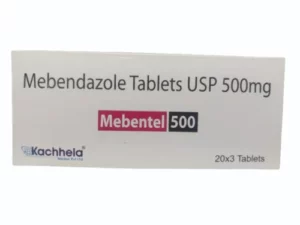
What Is Mebendazole 100 mg?
Mebendazole 100 mg is an antiparasitic medicine belonging to the benzimidazole class of anthelmintic drugs.
It is primarily used to treat intestinal infections caused by certain parasitic worms, also called helminths.
Intestinal worm infections can occur when parasite eggs or larvae enter the body through contaminated food, water, soil or contact with infected individuals.
Common intestinal worms include pinworms, roundworms, whipworms and hookworms.
These infections may cause abdominal discomfort, diarrhea, itching around the anus, nutritional deficiencies and other symptoms.
Some infected individuals may have few or no noticeable symptoms.
Mebendazole works by interfering with the parasite’s microtubule system and its ability to utilize glucose.
This disrupts important cellular functions and reduces the parasite’s energy supply.
As a result, susceptible worms gradually become unable to survive.
Mebendazole is commonly used in short treatment courses for selected intestinal helminth infections.
The treatment schedule depends on the organism involved.
For example, pinworm infection may be treated with a single 100 mg dose, whereas certain other intestinal worm infections require treatment over several days.
Because reinfection is possible, hygiene measures and appropriate household management are important.
Important: Mebendazole does not reliably treat every type of intestinal parasite. Accurate diagnosis is important when symptoms persist or the infection is uncertain.
How Does Mebendazole 100 mg Work?
1. Targets Parasitic Worms
Mebendazole acts against susceptible intestinal helminths.
2. Binds to Parasite Beta-Tubulin
The medicine binds to beta-tubulin within susceptible parasite cells.
3. Inhibits Microtubule Formation
Mebendazole interferes with microtubule polymerization.
4. Disrupts Cellular Transport
Microtubule inhibition affects important intracellular transport and structural functions.
5. Reduces Glucose Uptake
The medicine interferes with the parasite’s ability to obtain and utilize glucose.
6. Depletes Energy Stores
Reduced glucose utilization contributes to depletion of glycogen and energy reserves.
7. Impairs Parasite Survival
Disruption of cellular functions and energy metabolism leads to parasite immobilization and death.
8. Supports Elimination of Intestinal Worms
Dead worms are generally eliminated through normal intestinal processes.
Important: Mebendazole does not reliably destroy all parasite eggs. Repeat treatment may be necessary for certain infections.
Uses of Mebendazole 100 mg
1. Pinworm Infection (Enterobiasis)
Mebendazole is commonly used to treat pinworm infection caused by Enterobius vermicularis.
Pinworm infection often causes itching around the anus, particularly at night.
2. Roundworm Infection (Ascariasis)
Mebendazole may be used for intestinal infection caused by Ascaris lumbricoides.
3. Whipworm Infection (Trichuriasis)
It is used to treat certain infections caused by Trichuris trichiura.
4. Hookworm Infection
Mebendazole may be used for susceptible hookworm infections, including those caused by Ancylostoma duodenale and Necator americanus.
5. Mixed Intestinal Helminth Infections
It may be prescribed for certain mixed infections involving susceptible intestinal worms.
6. Intestinal Deworming
Mebendazole is used in appropriate deworming programs and individual treatment regimens.
7. Household Pinworm Management
Treatment of household members may be recommended in certain circumstances to reduce reinfection.
8. Selected Soil-Transmitted Helminth Infections
Mebendazole may be used in public health programs targeting soil-transmitted helminths.
Important: Mebendazole is not a standard treatment for all tapeworm infections, protozoal infections, malaria or every type of parasitic disease.
How to Take Mebendazole 100 mg
Mebendazole should be taken according to the product instructions or healthcare professional’s advice.
General Administration Instructions
- Confirm the type of worm infection when possible.
- Check the prescribed dose and treatment duration.
- Take the medicine orally.
- Swallow or chew the tablet according to its formulation instructions.
- It may generally be taken with or without food.
- Do not exceed the recommended dose.
- Follow the full prescribed treatment schedule.
- Maintain appropriate personal hygiene.
- Wash hands thoroughly after using the toilet.
- Keep fingernails short and clean.
- Wash bedding and clothing regularly when managing pinworm infection.
- Follow medical advice regarding repeat dosing.
- Do not share medication without appropriate guidance.
- Seek medical assessment if symptoms persist.
Dosage Information
| Infection | Common Treatment Regimen |
|---|---|
| Pinworm (Enterobiasis) | 100 mg as a Single Oral Dose |
| Pinworm Reinfection Prevention | Repeat Dose After Approximately 2 Weeks May Be Recommended |
| Roundworm (Ascariasis) | 100 mg Twice Daily for 3 Days |
| Whipworm (Trichuriasis) | 100 mg Twice Daily for 3 Days |
| Hookworm Infection | 100 mg Twice Daily for 3 Days |
| Selected Mixed Worm Infections | Based on Organisms and Clinical Guidelines |
| Children | Depends on Age, Formulation and Local Guidance |
| Pregnancy | Requires Medical Assessment |
| Treatment Duration | Depends on Infection Type |
| Repeat Treatment | As Clinically Indicated |
Important: These are commonly used regimens for certain 100 mg mebendazole products. Approved dosing, age restrictions and treatment duration may vary by country and formulation.
Some public health deworming programs use different strengths and schedules.
Can Mebendazole Be Taken With Food?
Yes. It can generally be taken with or without food.
Should Mebendazole Be Chewed or Swallowed?
Follow the instructions for the specific tablet formulation.
Some mebendazole products are chewable tablets.
Is One Tablet Enough for Deworming?
A single 100 mg dose may be appropriate for pinworm infection.
Other intestinal worm infections may require a longer course.
Can Mebendazole Be Taken Again?
Repeat treatment may be recommended for pinworm infection because parasite eggs can cause reinfection.
What If a Dose Is Missed?
Follow the product instructions.
If a scheduled dose is missed, take it when remembered unless it is nearly time for the next dose.
Do not double the dose.
What If Too Much Mebendazole Is Taken?
Seek medical advice.
Overdose may cause abdominal discomfort, nausea, vomiting or diarrhea.
Prolonged excessive exposure may increase the risk of serious adverse effects.
How Long Does Mebendazole 100 mg Take to Work?
Mebendazole begins acting against susceptible worms after administration.
During the First 24 Hours
The medicine begins interfering with parasite microtubule formation and glucose utilization.
Within Several Days
Susceptible intestinal worms may die and be eliminated.
During the Prescribed Course
Treatment continues according to the type of worm infection.
After Treatment
Symptoms may gradually improve as the infection resolves.
After Approximately 2 Weeks
For pinworm infection, a repeat dose may be recommended to address worms that develop after the initial treatment.
Important: Symptom improvement and complete parasite elimination are not always immediate.
Persistent symptoms may require further testing or alternative treatment.
Common Side Effects
Possible side effects include:
- Abdominal Pain
- Stomach Discomfort
- Diarrhea
- Nausea
- Vomiting
- Flatulence
- Mild Headache
- Dizziness
- Loss of Appetite
- Mild Skin Rash
Not all patients experience these effects.
Serious Side Effects
Seek urgent medical attention if any of the following occur:
- Severe Allergic Reactions
- Swelling of the Face or Throat
- Difficulty Breathing
- Severe or Blistering Skin Rash
- Skin Peeling
- Mouth Ulcers With Fever
- Unusual Bruising or Bleeding
- Persistent Fever
- Severe Weakness
- Yellowing of the Skin or Eyes
- Seizures
Important Serious Risks
1. Severe Skin Reactions
Rare serious skin reactions, including Stevens–Johnson syndrome and toxic epidermal necrolysis, have been reported.
The risk of severe skin reactions is particularly important when mebendazole is combined with metronidazole.
2. Blood Cell Disorders
Rare neutropenia, agranulocytosis and other blood abnormalities have been reported, particularly with prolonged or high-dose treatment.
3. Liver Injury
Liver enzyme abnormalities and rare clinically significant liver injury may occur.
4. Severe Hypersensitivity Reactions
Anaphylaxis and other serious allergic reactions are possible.
5. Seizures
Seizures have been reported rarely, including in young children.
6. Gastrointestinal Complications
Abdominal discomfort and diarrhea may occur during treatment.
Contraindications & Precautions
1. Hypersensitivity
Patients with known serious hypersensitivity to mebendazole or formulation components should avoid the medicine.
2. Pregnancy
Use during pregnancy requires careful medical assessment.
Mebendazole is generally avoided during the first trimester unless the expected benefit justifies treatment under applicable clinical guidance.
3. Breastfeeding
Mebendazole has low systemic absorption, but breastfeeding use should follow professional guidance.
4. Children Under 2 Years
Use in very young children depends on the product’s approval, local public health recommendations and clinical assessment.
5. Metronidazole Interaction
Concurrent use with metronidazole should generally be avoided because serious skin reactions have been reported.
6. Liver Disease
Patients with significant liver disease may require additional assessment.
7. Prolonged Treatment
Long-term or high-dose treatment may require blood count and liver function monitoring.
8. Incorrect Parasite Diagnosis
Mebendazole does not treat every parasitic infection.
9. Reinfection
Pinworm reinfection may occur if hygiene measures are inadequate.
10. Household Transmission
Pinworm infection can spread among household members.
11. Poor Hygiene
Contaminated hands, surfaces and bedding may contribute to reinfection.
12. Persistent Symptoms
Persistent symptoms after treatment require medical evaluation.
13. Severe Abdominal Symptoms
Severe abdominal pain, vomiting or suspected intestinal obstruction requires prompt assessment.
14. Drug Interactions
Patients should disclose all medicines and supplements.
15. Cimetidine
Cimetidine may increase systemic mebendazole concentrations.
16. Antiepileptic Medicines
Certain enzyme-inducing medicines may alter mebendazole exposure.
17. Appropriate Treatment Duration
The treatment course should match the infection.
18. Medical Monitoring
Healthcare professionals may monitor:
- Worm Infection Symptoms
- Treatment Response
- Abdominal Symptoms
- Persistent Anal Itching
- Stool Examination When Indicated
- Reinfection Risk
- Household Exposure
- Medication Tolerability
- Skin Reactions
- Liver Function During Prolonged Treatment
- Blood Cell Counts During Prolonged Treatment
- Pregnancy Status When Relevant
- Pediatric Age and Weight
- Drug Interactions
- Overall Clinical Condition
Potential Therapeutic Advantages
- Benzimidazole Anthelmintic.
- Intestinal Worm Treatment.
- Pinworm Treatment.
- Roundworm Treatment.
- Whipworm Treatment.
- Hookworm Treatment.
- Selected Mixed Helminth Infection Treatment.
- Microtubule Formation Inhibition.
- Parasite Glucose Utilization Disruption.
- Oral Administration.
- Short-Course Treatment Options.
- Established Deworming Medicine.
- Low Systemic Absorption.
- Selected Public Health Deworming Use.
- Clinically Established Antiparasitic Therapy.
Disadvantages / Limitations
- Abdominal Pain.
- Diarrhea.
- Nausea.
- Vomiting.
- Headache.
- Dizziness.
- Skin Rash.
- Rare Severe Skin Reactions.
- Rare Blood Cell Disorders.
- Potential Liver Effects.
- Pregnancy Precautions.
- Pediatric Age Restrictions.
- Metronidazole Interaction.
- Reinfection Risk.
- Not Effective Against All Parasites.
- Repeat Treatment May Be Required.
- Requires Correct Infection Diagnosis.
Important Notes
Generic Name: Mebendazole.
Strength: 100 mg.
Drug Class: Benzimidazole Anthelmintic.
Therapeutic Category: Antiparasitic / Deworming Medicine.
Primary Uses: Pinworm, Roundworm, Whipworm and Hookworm Infections.
Mechanism of Action: Inhibition of Parasite Microtubule Formation.
Route: Oral.
Dosage Form: Tablet / Chewable Tablet.
Common Pinworm Dose: 100 mg Single Dose.
Common Other Intestinal Worm Regimen: 100 mg Twice Daily for 3 Days.
Repeat Pinworm Treatment: May Be Recommended After 2 Weeks.
Important Interaction: Metronidazole.
Pregnancy: Requires Medical Assessment.
Medical Supervision: Recommended.
Frequently Asked Questions
1. What is Mebendazole 100 mg used for?
Mebendazole 100 mg is used to treat certain intestinal worm infections, including pinworm, roundworm, whipworm and hookworm infections.
2. Is Mebendazole 100 mg a deworming medicine?
Yes. It belongs to the benzimidazole anthelmintic class.
3. How does mebendazole work?
It interferes with parasite microtubule formation and glucose utilization, impairing worm survival.
4. Can mebendazole treat pinworm infection?
Yes. It is commonly used to treat pinworm infection.
5. Can mebendazole treat roundworms?
Yes. It may be used for susceptible roundworm infections.
6. Can mebendazole treat hookworms?
Yes. It is used for certain hookworm infections.
7. Can mebendazole treat whipworms?
Yes. It may be prescribed for whipworm infection.