What Is Bupropion Hydrochloride ER USP 150 mg?
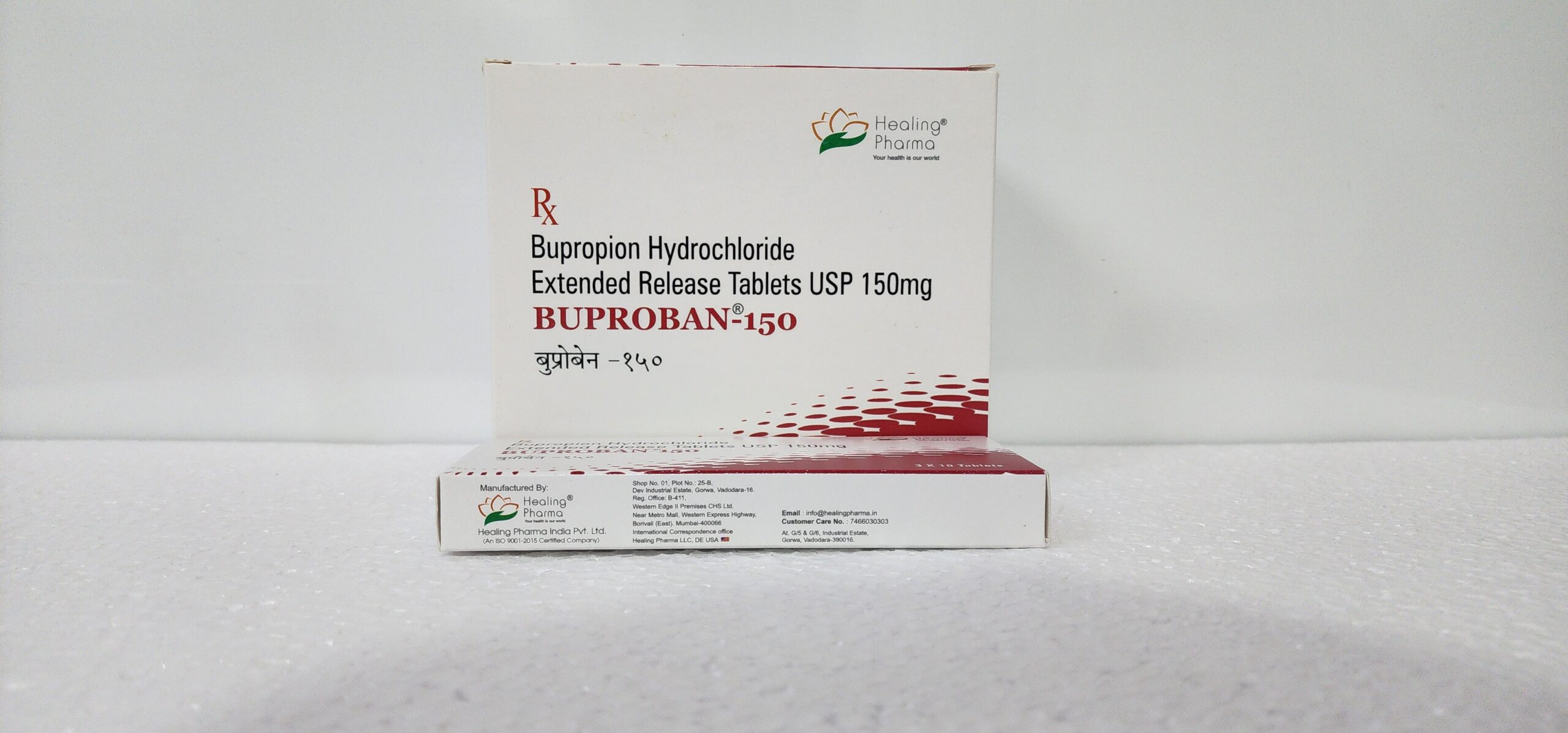
Bupropion Hydrochloride ER USP 150 mg is a prescription antidepressant containing bupropion hydrochloride in an extended-release formulation.
Bupropion belongs to a class of medicines known as norepinephrine-dopamine reuptake inhibitors (NDRIs).
It is primarily used to treat major depressive disorder.
Certain bupropion formulations are also approved for preventing seasonal major depressive episodes in patients with seasonal affective disorder or for helping adults stop smoking.
Bupropion works differently from selective serotonin reuptake inhibitors (SSRIs).
Instead of primarily targeting serotonin reuptake, bupropion inhibits the reuptake of norepinephrine and dopamine.
These neurotransmitters are involved in mood, motivation, attention, reward processing, and other neurological functions.
Major depressive disorder may cause symptoms such as:
- Persistent low mood
- Loss of interest in activities
- Reduced motivation
- Fatigue
- Difficulty concentrating
- Sleep disturbances
- Changes in appetite
- Feelings of hopelessness
- Reduced daily functioning
Bupropion may help improve depressive symptoms by modifying norepinephrine and dopamine neurotransmission.
Extended-release formulations are designed to release the active ingredient gradually over time.
This helps maintain drug exposure over the prescribed dosing interval.
Important: Bupropion is not suitable for every patient. It can increase seizure risk and is contraindicated in certain conditions, including seizure disorders and current or prior bulimia or anorexia nervosa.
How Does Bupropion Hydrochloride ER 150 mg Work?
1. Inhibits Norepinephrine Reuptake
Bupropion reduces the reuptake of norepinephrine, a neurotransmitter involved in alertness, attention, and mood regulation.
2. Inhibits Dopamine Reuptake
Bupropion also affects dopamine reuptake.
Dopamine is involved in motivation, reward processing, and movement.
3. Influences Mood Regulation
Changes in norepinephrine and dopamine signaling may help improve depressive symptoms over time.
4. Supports Motivation and Energy
Some patients may experience improvements in motivation, energy, and concentration as depression responds to treatment.
Individual responses vary.
5. Acts on Nicotinic Acetylcholine Receptors
Bupropion and certain metabolites also have nicotinic acetylcholine receptor antagonist activity.
This contributes to its role in smoking cessation.
6. Provides Gradual Drug Release
Extended-release formulations release bupropion over a longer period than immediate-release tablets.
7. Supports Continued Symptom Management
When used consistently at an appropriate prescribed dose, bupropion may help maintain improvement in depressive symptoms.
It does not guarantee permanent recovery.
Uses of Bupropion Hydrochloride ER USP 150 mg
1. Major Depressive Disorder
Bupropion is approved for the treatment of major depressive disorder in adults.
It may help improve symptoms such as persistent sadness, loss of interest, fatigue, and reduced motivation.
2. Seasonal Affective Disorder
Certain once-daily extended-release formulations are approved for the prevention of seasonal major depressive episodes in patients with seasonal affective disorder.
3. Smoking Cessation
Specific sustained-release bupropion products are approved as smoking cessation aids.
They may help reduce nicotine cravings and withdrawal symptoms.
Important: Not every bupropion ER product is labeled for smoking cessation.
4. Depression Associated With Low Energy
Bupropion may be considered for selected patients whose depressive symptoms include low energy or reduced motivation.
5. Depression With Concentration Difficulties
Some patients experience concentration problems as part of depression.
Improvement in depressive symptoms may also improve concentration.
6. Maintenance Treatment for Depression
Continued bupropion treatment may help reduce the risk of depressive relapse in appropriately selected patients.
7. Alternative Antidepressant Treatment
Bupropion may be considered when another antidepressant is unsuitable, ineffective, or causes troublesome adverse effects.
8. Other Specialist-Directed Uses
Bupropion may be prescribed off-label for selected conditions, including certain attention-related disorders.
Such use requires individual medical assessment and should not be presented as a universally approved indication.
How to Take Bupropion Hydrochloride ER 150 mg
Bupropion should be taken exactly as prescribed.
Step-by-Step Administration Instructions
- Confirm whether the product is SR or XL.
- Check the prescribed strength and dosing schedule.
- Swallow the tablet whole with water.
- Do not crush, chew, or split the extended-release tablet.
- Take the medicine at the prescribed time.
- Bupropion may generally be taken with or without food.
- Avoid taking more than the prescribed dose.
- Inform the prescriber about all other medicines.
- Report severe mood changes, seizures, or unusual symptoms.
- Attend scheduled follow-up appointments.
Dosage Information
The dosing schedule depends on the formulation and indication.
For bupropion XL 150 mg: A common adult starting dose for major depressive disorder is 150 mg once daily in the morning. A clinician may increase the dose after assessing response and tolerability.
For bupropion SR 150 mg: A common adult starting regimen for depression is 150 mg once daily, followed by an increase to twice-daily dosing when appropriate.
These are general examples, not personalized dosing instructions.
The appropriate dose depends on:
- Medical diagnosis
- SR or XL formulation
- Patient age
- Liver function
- Kidney function
- Seizure risk
- Concurrent medicines
- Treatment response
- Tolerability
Important: Never assume that SR and XL tablets can be taken on the same schedule. Do not combine different bupropion-containing products unless specifically instructed by the prescriber.
Why Should Extended-Release Tablets Be Swallowed Whole?
Crushing or chewing extended-release bupropion may cause the medicine to be released too quickly.
This can increase adverse effects, including seizure risk.
When Should Bupropion Be Taken?
Bupropion XL is commonly taken in the morning.
Bupropion SR may be prescribed once or twice daily, depending on the indication.
For twice-daily SR regimens, doses are generally separated by at least eight hours.
Follow the product-specific prescribing instructions.
Can Bupropion Be Stopped Suddenly?
Patients should consult their healthcare professional before discontinuing bupropion.
Stopping antidepressant treatment may lead to a return of depressive symptoms.
A clinician may recommend gradual dose reduction or another individualized discontinuation plan.
Missed Dose
If a dose is missed, skip the missed dose and take the next dose at the regular scheduled time, unless the product leaflet or prescriber gives different instructions.
Do not double the dose.
Taking doses too close together may increase seizure risk.
How Long Does Bupropion Hydrochloride ER 150 mg Take to Work?
Bupropion begins affecting neurotransmitter signaling after administration.
However, meaningful improvement in depression usually develops over several weeks.
Typical Treatment Response
First 1–2 Weeks: Some patients may notice early changes in energy, sleep, or other symptoms.
Approximately 2–4 Weeks: Improvement in mood and motivation may become more noticeable.
Approximately 4–8 Weeks: A fuller antidepressant response may develop.
Some patients require longer treatment or dose adjustments.
Important: Do not increase the dose independently if symptoms do not improve immediately.
Common Side Effects
Possible side effects include:
- Dry mouth
- Nausea
- Insomnia
- Headache
- Dizziness
- Constipation
- Increased sweating
- Anxiety
- Agitation
- Tremor
- Reduced appetite
- Weight changes
- Palpitations
Some adverse effects may improve as the body adjusts to treatment.
Persistent or troublesome symptoms should be discussed with a healthcare professional.
Serious Side Effects
Seek urgent medical attention if you experience:
- Seizures
- New or worsening suicidal thoughts
- Severe agitation
- Severe allergic reactions
- Significant changes in behavior
- Hallucinations
- Severe confusion
- Markedly elevated blood pressure
- Severe manic symptoms
- Sudden eye pain or vision changes
Important Serious Adverse Reactions
Seizures: Bupropion has a dose-related seizure risk. The risk increases with certain medical conditions, drug interactions, and excessive dosing.
Suicidal Thoughts and Behaviors: Antidepressants carry a boxed warning in the United States regarding increased suicidal thoughts and behaviors in children, adolescents, and young adults during short-term studies.
Hypertension: Bupropion may increase blood pressure, particularly when used with certain other medicines or nicotine replacement products.
Neuropsychiatric Symptoms: Agitation, anxiety, hallucinations, paranoia, or unusual behavioral changes may occur.
Mania or Hypomania: Antidepressant treatment may trigger manic or hypomanic episodes in susceptible patients.
Angle-Closure Glaucoma: Bupropion may trigger angle-closure glaucoma in susceptible patients with anatomically narrow angles.
Severe Allergic Reactions: Serious hypersensitivity reactions may occur.
Contraindications & Precautions
1. Allergy to Bupropion
Patients with known hypersensitivity to bupropion or other tablet ingredients should not take the medicine.
2. Seizure Disorders
Bupropion is contraindicated in patients with seizure disorders.
3. Eating Disorders
Bupropion is contraindicated in patients with a current or prior diagnosis of bulimia or anorexia nervosa because of increased seizure risk.
4. Abrupt Alcohol Withdrawal
Bupropion is contraindicated in patients undergoing abrupt discontinuation of alcohol when this increases seizure risk.
5. Abrupt Withdrawal of Certain Medicines
Abrupt discontinuation of benzodiazepines, barbiturates, or antiepileptic medicines may increase seizure risk.
6. Monoamine Oxidase Inhibitors
Bupropion must not be combined with MAO inhibitors.
Appropriate washout periods are required.
7. Other Bupropion Products
Do not combine multiple bupropion-containing medicines without specific medical instructions.
8. Suicidal Thoughts
Patients should be monitored for worsening depression, suicidal thoughts, or unusual behavioral changes.
9. Bipolar Disorder
Patients should be assessed for bipolar disorder before starting antidepressant treatment.
10. High Blood Pressure
Bupropion may increase blood pressure.
Patients with hypertension may require additional monitoring.
11. Liver Impairment
Patients with hepatic impairment may require dose adjustments.
12. Kidney Impairment
Bupropion and its metabolites may accumulate in patients with renal impairment.
Dose or frequency adjustments may be necessary.
13. Head Injury
A history of severe head injury may increase seizure risk.
14. Pregnancy
Use during pregnancy requires individualized assessment of maternal benefits and potential fetal risks.
15. Breastfeeding
Bupropion and its metabolites may pass into breast milk.
Breastfeeding decisions should be made with a healthcare professional.
16. Alcohol
Alcohol may affect seizure risk and neuropsychiatric tolerability.
Patients should discuss alcohol use with their prescriber and avoid abrupt cessation of heavy alcohol consumption without medical supervision.
17. Medication Interactions
Potentially relevant medicines include:
- MAO inhibitors
- Other bupropion-containing products
- Tramadol
- Certain antipsychotics
- Certain antidepressants
- Systemic corticosteroids
- Theophylline
- Certain stimulants
- Levodopa
- Amantadine
- Carbamazepine
- Phenytoin
- Phenobarbital
- Ritonavir
- Efavirenz
- Metoprolol
- Certain tricyclic antidepressants
- Tamoxifen
- Nicotine replacement products
Bupropion inhibits CYP2D6 and may increase exposure to certain medicines metabolized by this enzyme.
It may also reduce the conversion of tamoxifen to its active metabolite.
18. Medical Monitoring
Healthcare professionals may monitor:
- Depression symptoms
- Suicidal thoughts
- Mood and behavior
- Blood pressure
- Sleep quality
- Anxiety and agitation
- Seizure risk
- Weight and appetite
- Treatment response
- Medication interactions
- Liver function when indicated
- Kidney function when indicated
- Signs of mania
- Treatment adherence
Advantages
- Contains bupropion hydrochloride 150 mg.
- Belongs to the NDRI antidepressant class.
- Used for major depressive disorder.
- May improve mood symptoms.
- May improve motivation and energy in selected patients.
- Certain formulations are approved for seasonal affective disorder.
- Specific SR products are approved for smoking cessation.
- Available in extended-release formulations.
- May be used as an alternative to certain serotonergic antidepressants.
- Generally associated with a lower rate of sexual dysfunction than many SSRIs.
- May be associated with less weight gain than some other antidepressants.
- Supports individualized depression treatment.
- Can be combined with psychotherapy when clinically appropriate.
Disadvantages / Limitations
- Requires a prescription.
- Carries a dose-related seizure risk.
- May cause insomnia.
- May cause dry mouth.
- May cause nausea.
- May cause headache.
- May cause anxiety or agitation.
- May increase blood pressure.
- May cause tremor.
- May reduce appetite.
- May trigger mania in susceptible patients.
- May cause serious allergic reactions.
- May interact with numerous medicines.
- Contraindicated in seizure disorders.
- Contraindicated in current or prior bulimia or anorexia nervosa.
- SR and XL formulations require different dosing schedules.
- Does not provide immediate antidepressant benefits.
- Does not guarantee permanent recovery from depression.
Important Notes
Generic Name: Bupropion Hydrochloride.
Active Ingredient: Bupropion Hydrochloride USP 150 mg.
Strength: 150 mg per tablet.
Dosage Form: Extended-Release Oral Tablet.
Release Type: SR or XL; verify the exact product.
Drug Class: Norepinephrine-Dopamine Reuptake Inhibitor.
Therapeutic Category: Antidepressant.
Primary Use: Major Depressive Disorder.
Additional Uses: Depend on the formulation and approved labeling.
Mechanism of Action: Inhibition of norepinephrine and dopamine reuptake.
Administration Route: Oral.
Dosage: Formulation-specific and individualized.
Tablet Precaution: Swallow whole; do not crush or chew.
Seizure Warning: Dose-related seizure risk.
Suicidality Warning: Monitor for worsening mood or suicidal thoughts.
Blood Pressure Precaution: May cause hypertension.
Eating Disorder Warning: Contraindicated in current or prior bulimia or anorexia nervosa.
Drug Interaction Precaution: Inhibits CYP2D6.
Pregnancy Precaution: Requires individualized medical assessment.
Storage: Follow manufacturer instructions.
Frequently Asked Questions
1. What is Bupropion Hydrochloride ER 150 mg used for?
Bupropion is primarily used to treat major depressive disorder. Certain formulations are also approved for seasonal affective disorder or smoking cessation.
2. What is the active ingredient in Bupropion ER 150 mg?
The active ingredient is bupropion hydrochloride 150 mg.
3. What does ER mean in Bupropion ER?
ER means extended release, indicating that the medicine is released gradually over time.
4. What is the difference between Bupropion SR and XL?
SR is generally designed for approximately 12-hour release, while XL is generally designed for approximately 24-hour release. They have different dosing schedules.
5. Is Bupropion an antidepressant?
Yes. Bupropion is a norepinephrine-dopamine reuptake inhibitor antidepressant.
6. Can Bupropion treat depression?
Yes. Bupropion is approved for major depressive disorder.
7. Can Bupropion help people quit smoking?
Specific sustained-release bupropion products are approved as smoking cessation aids.
8. How does Bupropion work?
It inhibits norepinephrine and dopamine reuptake, influencing neurotransmitter signaling involved in mood and motivation.
9. How long does Bupropion take to work?
Some improvement may occur within a few weeks, while fuller antidepressant benefits may take four to eight weeks or longer.
10. How should Bupropion ER 150 mg be taken?
Swallow the extended-release tablet whole according to the prescribed SR or XL dosing schedule.