






















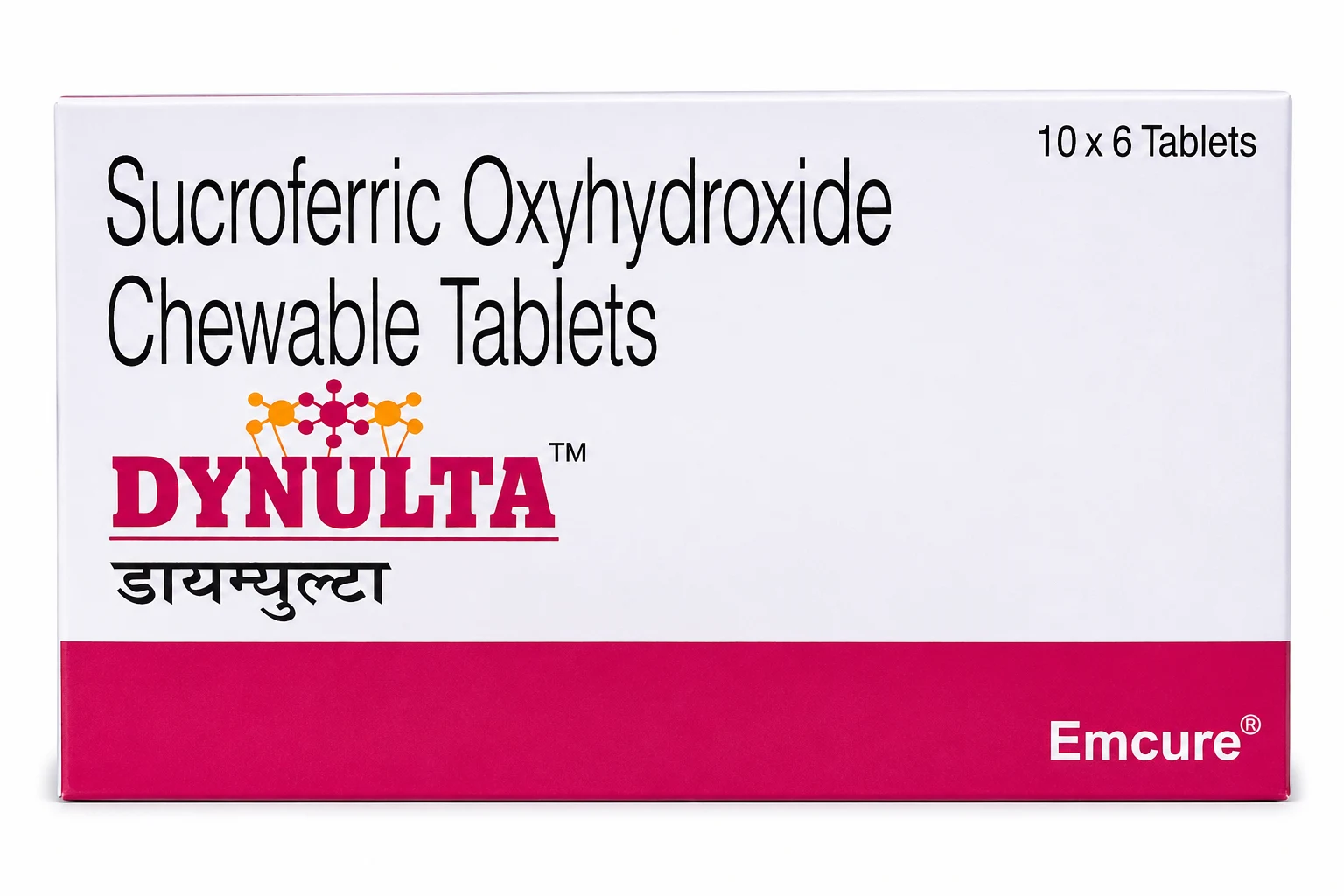
What Is Dynulta 2500 mg?
Dynulta 2500 mg is a prescription phosphate-binding medicine used to control elevated phosphorus levels in adults with chronic kidney disease (CKD) who are receiving dialysis.
When the kidneys cannot remove enough phosphorus from the bloodstream, phosphate levels may rise, leading to a condition called hyperphosphatemia.
Persistent hyperphosphatemia can contribute to mineral and bone disorders and vascular calcification.
Dynulta helps reduce phosphate absorption from food, supporting phosphorus management alongside dialysis and a prescribed renal diet. Apollo Pharmacy+1
How Does Dynulta 2500 mg Work?
Sucroferric Oxyhydroxide is an iron-based, calcium-free phosphate binder.
When taken with meals, it binds dietary phosphate inside the gastrointestinal tract, forming compounds that are poorly absorbed and eliminated through the stool.
This helps:
- Reduce phosphate absorption from food.
- Lower elevated blood phosphorus levels.
- Support phosphate control in dialysis patients.
- Reduce the complications associated with persistent hyperphosphatemia.
Dynulta works primarily in the digestive tract rather than directly improving kidney filtration.
Uses of Dynulta 2500 mg
- Treatment of hyperphosphatemia in adults with CKD receiving dialysis.
- Reduction of dietary phosphate absorption.
- Management of elevated serum phosphorus.
- Support of mineral and bone disorder management in CKD.
- Complementary treatment alongside dialysis and dietary phosphorus restriction.
How to Take Dynulta 2500 mg
- Take the medicine with meals, as prescribed.
- Chew or crush the tablet before swallowing; do not swallow it whole.
- Follow the prescribed number of tablets for each meal.
- Do not exceed the recommended dose.
- Continue following your renal dietary plan.
- Attend regular blood phosphate monitoring appointments.
The dose is individualized according to serum phosphorus levels and treatment response. The commonly referenced 500 mg elemental-iron equivalent per tablet must not be confused with the 2500 mg sucroferric oxyhydroxide content.
Common Side Effects
- Diarrhea
- Dark or discolored stools
- Nausea
- Abdominal discomfort
- Constipation
- Vomiting
Dark stools are an expected effect of this iron-containing medicine, but persistent gastrointestinal bleeding symptoms require medical assessment.
Serious Side Effects
Seek medical attention for severe or persistent diarrhea, dehydration, severe abdominal pain, significant allergic reactions, or signs of gastrointestinal bleeding.
Patients with gastrointestinal disorders or iron-overload conditions may require additional monitoring.
Contraindications & Precautions
Inform your healthcare professional if you have:
- Allergy to sucroferric oxyhydroxide or other ingredients.
- Hemochromatosis or another iron-overload disorder.
- Significant gastrointestinal disease.
- Difficulty swallowing or chewing tablets.
- A history of gastrointestinal surgery.
- Pregnancy or breastfeeding.
- Other medicines that may interact with phosphate binders.
Sucroferric oxyhydroxide can interfere with the absorption of certain oral medicines. Some medicines, including levothyroxine and particular antibiotics, may require specific administration intervals or alternative treatment arrangements.
Advantages
- Helps lower elevated blood phosphorus.
- Calcium-free phosphate-binding formulation.
- Acts mainly within the gastrointestinal tract.
- Can be used alongside dialysis.
- Supports long-term phosphorus management.
- Chewable tablet formulation.
- May reduce the need for calcium-containing phosphate binders in selected patients.
Disadvantages / Limitations
- May cause diarrhea and gastrointestinal discomfort.
- Frequently causes dark stools.
- Requires administration with meals.
- Does not cure chronic kidney disease.
- Does not replace dialysis.
- Requires ongoing phosphate monitoring.
- May interfere with absorption of other medicines.
- Is not intended to treat iron-deficiency anemia.
Important Notes
Dynulta should be used under nephrologist supervision. Patients generally require monitoring of serum phosphorus, calcium, and other parameters relevant to CKD mineral and bone disorders.
It is not an iron supplement, despite containing iron, and should not be used as a substitute for prescribed anemia treatment.
Frequently Asked Questions
What is Dynulta 2500 mg used for?
It is used to reduce elevated blood phosphorus levels in adults with chronic kidney disease who are receiving dialysis.
What is the active ingredient in Dynulta?
Sucroferric Oxyhydroxide 2500 mg, equivalent to 500 mg elemental iron.
Is Dynulta a phosphate binder?
Yes. It is an iron-based, calcium-free phosphate binder.
Should Dynulta be taken with food?
Yes. It should be taken with meals so it can bind dietary phosphate.
Can Dynulta tablets be swallowed whole?
No. The chewable tablets should be chewed or crushed before swallowing.
Can Dynulta cause black stools?
Yes. Dark stools are a common effect of iron-based phosphate binders.
Can Dynulta cause diarrhea?
Yes. Diarrhea is among its common adverse effects.
Does Dynulta improve kidney function?
No. It helps manage phosphorus levels but does not restore damaged kidney function.
Can Dynulta replace dialysis?
No. It is used alongside dialysis and appropriate dietary management.
Is Dynulta an iron supplement?
No. Its primary purpose is phosphate binding, not the treatment of iron-deficiency anemia.
Is Dynulta a steroid or hormone?
No. It is an iron-based phosphate-binding medicine.
Can Dynulta be taken daily?
It may be prescribed regularly with meals. The number of tablets and treatment duration depend on the nephrologist’s instructions.