




















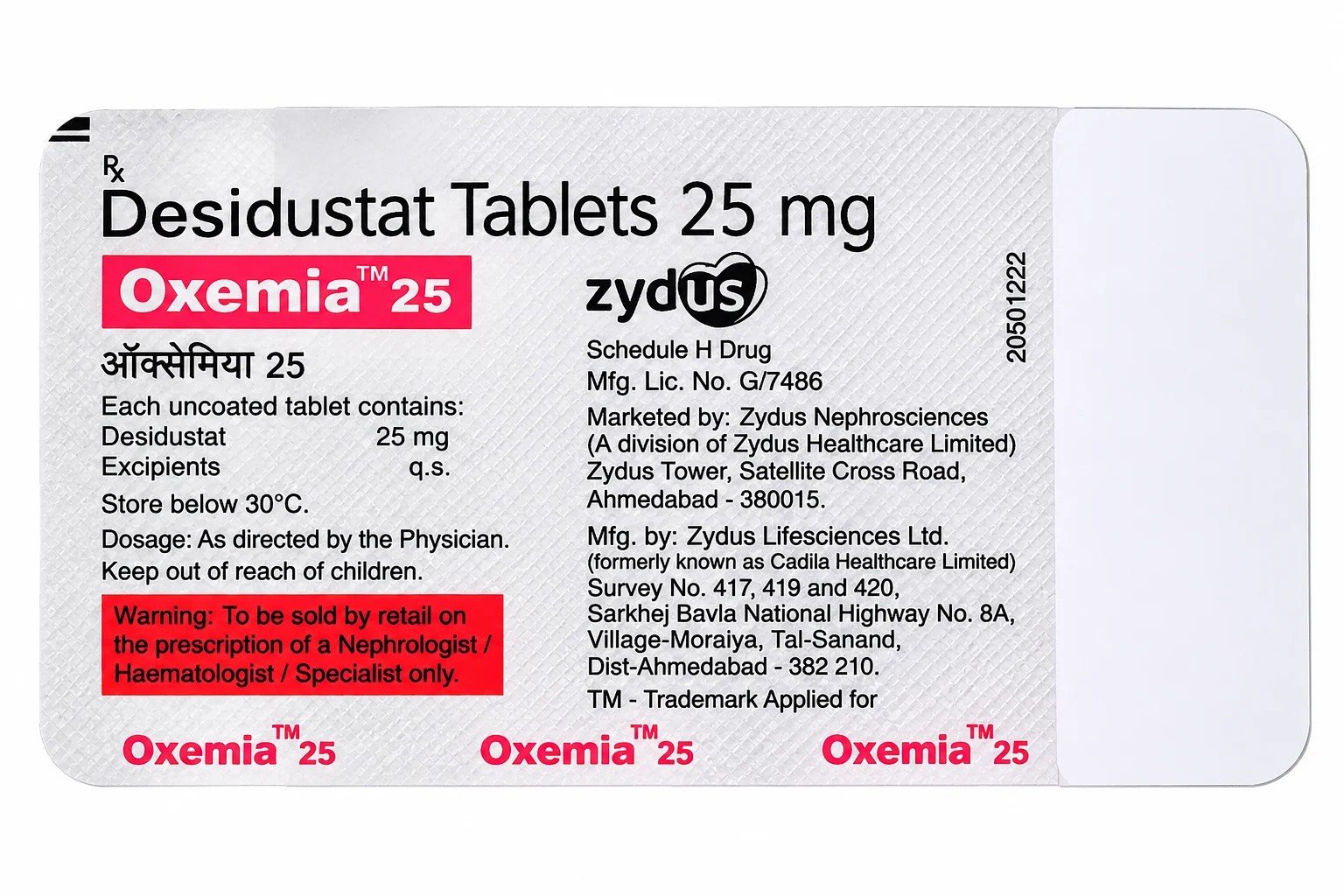
What Is Oxemia 50 mg?
Oxemia 50 mg contains Desidustat, an oral prescription medicine used for the treatment of anemia associated with chronic kidney disease (CKD) in adults, where approved.
Chronic kidney disease occurs when the kidneys gradually lose their ability to perform essential functions, including filtering waste products and regulating fluid and electrolyte balance.
Healthy kidneys also produce erythropoietin, a hormone that stimulates the bone marrow to produce red blood cells.
In patients with CKD, reduced erythropoietin production and disturbances in iron metabolism can contribute to anemia.
Anemia may cause symptoms such as:
- Persistent tiredness
- General weakness
- Reduced exercise tolerance
- Shortness of breath
- Dizziness
- Difficulty concentrating
- Reduced physical endurance
Oxemia works by stimulating the body’s response to low oxygen levels, helping increase endogenous erythropoietin activity and supporting red blood cell production.
Unlike injectable erythropoiesis-stimulating agents (ESAs), Desidustat is administered orally.
However, treatment requires medical supervision and regular hemoglobin monitoring.
How Does Oxemia 50 mg Work?
Oxemia contains Desidustat, a Hypoxia-Inducible Factor Prolyl Hydroxylase (HIF-PH) inhibitor.
The medicine works through the body’s natural oxygen-sensing pathway.
1. Inhibition of Prolyl Hydroxylase Enzymes
Under normal oxygen conditions, prolyl hydroxylase enzymes help regulate the breakdown of hypoxia-inducible factor (HIF) proteins.
Desidustat inhibits these enzymes, allowing HIF proteins to remain active for longer.
2. Stimulation of Erythropoietin Production
Stabilized HIF proteins promote the expression of genes involved in the body’s response to reduced oxygen availability.
This includes stimulation of endogenous erythropoietin production.
Erythropoietin signals the bone marrow to produce red blood cells.
3. Improvement in Iron Utilization
HIF pathway activation can influence iron transport and metabolism, helping support the availability of iron for red blood cell formation.
4. Increased Hemoglobin Production
By supporting erythropoiesis, Desidustat can increase hemoglobin concentrations in appropriately selected patients with CKD-associated anemia.
The goal is to improve anemia control while avoiding excessive increases in hemoglobin.
Uses of Oxemia 50 mg
1. Anemia Associated with Chronic Kidney Disease
Oxemia is used to treat anemia caused by chronic kidney disease in adults, according to applicable local approvals.
2. Anemia in Non-Dialysis CKD Patients
Desidustat may be prescribed for eligible patients with CKD-associated anemia who are not receiving dialysis.
3. Anemia in Dialysis-Dependent CKD Patients
Desidustat may also be used in eligible patients receiving dialysis, according to the approved prescribing information and nephrologist’s assessment.
4. Support of Red Blood Cell Production
Oxemia stimulates the body’s endogenous erythropoietin response, helping support red blood cell formation.
5. Management of Low Hemoglobin Due to CKD
Oxemia may help improve hemoglobin levels when anemia is associated with chronic kidney disease.
Important: Oxemia is not intended to treat every type of anemia. Iron deficiency, vitamin B12 deficiency, folate deficiency, bleeding, and other causes of anemia require appropriate evaluation and treatment.
How to Take Oxemia 50 mg
- Take Oxemia exactly as prescribed by your nephrologist.
- Swallow the tablet whole with water.
- Follow the prescribed dosing schedule.
- Do not increase or decrease the dose without medical advice.
- Attend regular hemoglobin monitoring appointments.
- Take prescribed iron supplements if recommended.
- Inform your healthcare professional about all other medicines you are taking.
- Do not discontinue treatment without consulting your doctor.
Dosage Information: Desidustat dosing depends on the patient’s hemoglobin concentration, dialysis status, clinical response, and applicable prescribing information.
Oxemia 50 mg represents the strength of each tablet, not necessarily the total daily dose.
Desidustat may be prescribed on a non-daily schedule, depending on the approved regimen. Do not assume it should be taken every day.
Important: Hemoglobin should be monitored regularly to avoid an excessive rise, which may increase cardiovascular and thrombotic risks.
Common Side Effects
Possible side effects reported during treatment or associated with this medicine class include:
- Headache
- Nausea
- Vomiting
- Abdominal discomfort
- Diarrhea
- High blood pressure
- Dizziness
- Fatigue
- Changes in laboratory parameters
The frequency and type of adverse reactions depend on the patient’s condition, dialysis status, and treatment regimen.
Serious Side Effects
Seek immediate medical attention if you experience:
- Chest pain
- Sudden shortness of breath
- Severe or persistent headache
- Sudden weakness on one side of the body
- Difficulty speaking
- Severe high blood pressure
- Pain or swelling in one leg
- Sudden vision changes
- Severe allergic reactions
- Signs of blood clot formation
Important: Medicines that stimulate erythropoiesis may be associated with cardiovascular and thrombotic risks, particularly if hemoglobin rises excessively.
The safety profile of Desidustat should be evaluated according to its approved product information and the patient’s individual risk factors.
Contraindications & Precautions
Before taking Oxemia 50 mg, inform your healthcare professional if you:
- Are allergic to Desidustat or any tablet ingredient.
- Have uncontrolled high blood pressure.
- Have a history of blood clots.
- Have experienced a heart attack or stroke.
- Have cardiovascular disease.
- Have liver disease.
- Have an active malignancy.
- Have iron deficiency.
- Have another untreated cause of anemia.
- Are pregnant, planning pregnancy, or breastfeeding.
- Are receiving other anemia treatments.
Hemoglobin Monitoring: Regular hemoglobin measurements are essential to evaluate treatment response and reduce the risk of excessive hemoglobin elevation.
Blood Pressure: Patients with hypertension require careful monitoring during treatment.
Iron Status: Adequate iron availability is necessary for effective red blood cell production. Iron deficiency should be assessed and corrected when appropriate.
Cardiovascular Risk: Patients with cardiovascular disease or a history of thrombosis require individualized assessment.
Liver Function: Liver function may require monitoring according to the approved prescribing information.
Pregnancy and Breastfeeding: Safety information may be limited. Use requires specialist evaluation and should follow local product labeling.
Other Anemia Medicines: Do not combine Oxemia with erythropoiesis-stimulating agents or other HIF-PH inhibitors unless specifically directed by a specialist.
Advantages
- Oral treatment option for CKD-associated anemia.
- Stimulates endogenous erythropoietin production.
- Supports red blood cell formation.
- May help increase hemoglobin levels.
- Influences iron metabolism through the HIF pathway.
- May be suitable for eligible dialysis and non-dialysis CKD patients.
- Avoids the need for an injection for each dose.
- Can be incorporated into specialist CKD anemia management.
- Does not contain a corticosteroid.
Disadvantages / Limitations
- Requires regular hemoglobin monitoring.
- May increase blood pressure.
- Potential cardiovascular and thrombotic safety concerns require assessment.
- Not suitable for every type of anemia.
- Requires evaluation of iron status.
- May cause gastrointestinal side effects.
- Requires individualized dosing.
- Does not cure chronic kidney disease.
- Does not replace dialysis.
- Does not treat anemia caused solely by vitamin or iron deficiency.
- Long-term safety information may vary by patient population.
- Regulatory approval differs between countries.
Important Notes
Oxemia 50 mg is a prescription medicine used for the management of anemia associated with chronic kidney disease.
Patients receiving Desidustat may require monitoring of:
- Hemoglobin
- Complete blood count (CBC)
- Serum ferritin
- Transferrin saturation (TSAT)
- Blood pressure
- Kidney function
- Liver function, when indicated
- Signs of cardiovascular or thrombotic complications
The treatment goal is to maintain an appropriate hemoglobin concentration rather than increase hemoglobin to unnecessarily high levels.
Oxemia should not be used as a general energy booster or treatment for unexplained fatigue.
It is not a substitute for iron supplementation when iron deficiency is present.
Store according to the manufacturer’s instructions and keep out of reach of children.
Frequently Asked Questions
What is Oxemia 50 mg used for?
Oxemia 50 mg is used to treat anemia associated with chronic kidney disease in eligible adult patients, according to local prescribing approvals.
What is the active ingredient in Oxemia 50 mg?
Oxemia contains Desidustat 50 mg.
How does Oxemia 50 mg work?
Desidustat inhibits HIF prolyl hydroxylase enzymes, promoting endogenous erythropoietin production and supporting red blood cell formation.
Is Oxemia 50 mg used for chronic kidney disease?
Yes. Oxemia is used to manage CKD-associated anemia, but it does not treat or cure the underlying kidney disease.
Can Oxemia increase hemoglobin levels?
Yes. Desidustat stimulates erythropoiesis and can increase hemoglobin concentrations in appropriately selected patients.
Is Oxemia 50 mg an iron supplement?
No. Oxemia contains Desidustat, a HIF-PH inhibitor. It is not an iron supplement.
Can Oxemia be used by dialysis patients?
Desidustat may be prescribed for eligible dialysis-dependent CKD patients where approved. Treatment should be supervised by a nephrologist.
Can non-dialysis CKD patients use Oxemia?
Yes. Desidustat may be used in eligible non-dialysis CKD patients with anemia, depending on local approval and medical assessment.
Does Oxemia 50 mg require regular blood tests?
Yes. Hemoglobin, iron status, and other relevant parameters require regular monitoring.
Can Oxemia cause high blood pressure?
High blood pressure is a potential concern during treatment, and blood-pressure monitoring is recommended.
Can Oxemia 50 mg treat iron-deficiency anemia?
Oxemia is not a substitute for iron replacement. Iron-deficiency anemia requires appropriate diagnosis and treatment.
Is Oxemia 50 mg taken every day?
Not necessarily. Desidustat may be prescribed on a non-daily schedule. Follow the specific dosing instructions provided by your nephrologist.
Is Oxemia 50 mg a steroid or hormone?
No. Oxemia contains Desidustat, a HIF-PH inhibitor. It stimulates the body’s endogenous erythropoietin pathway but is not itself a steroid or hormone.