






























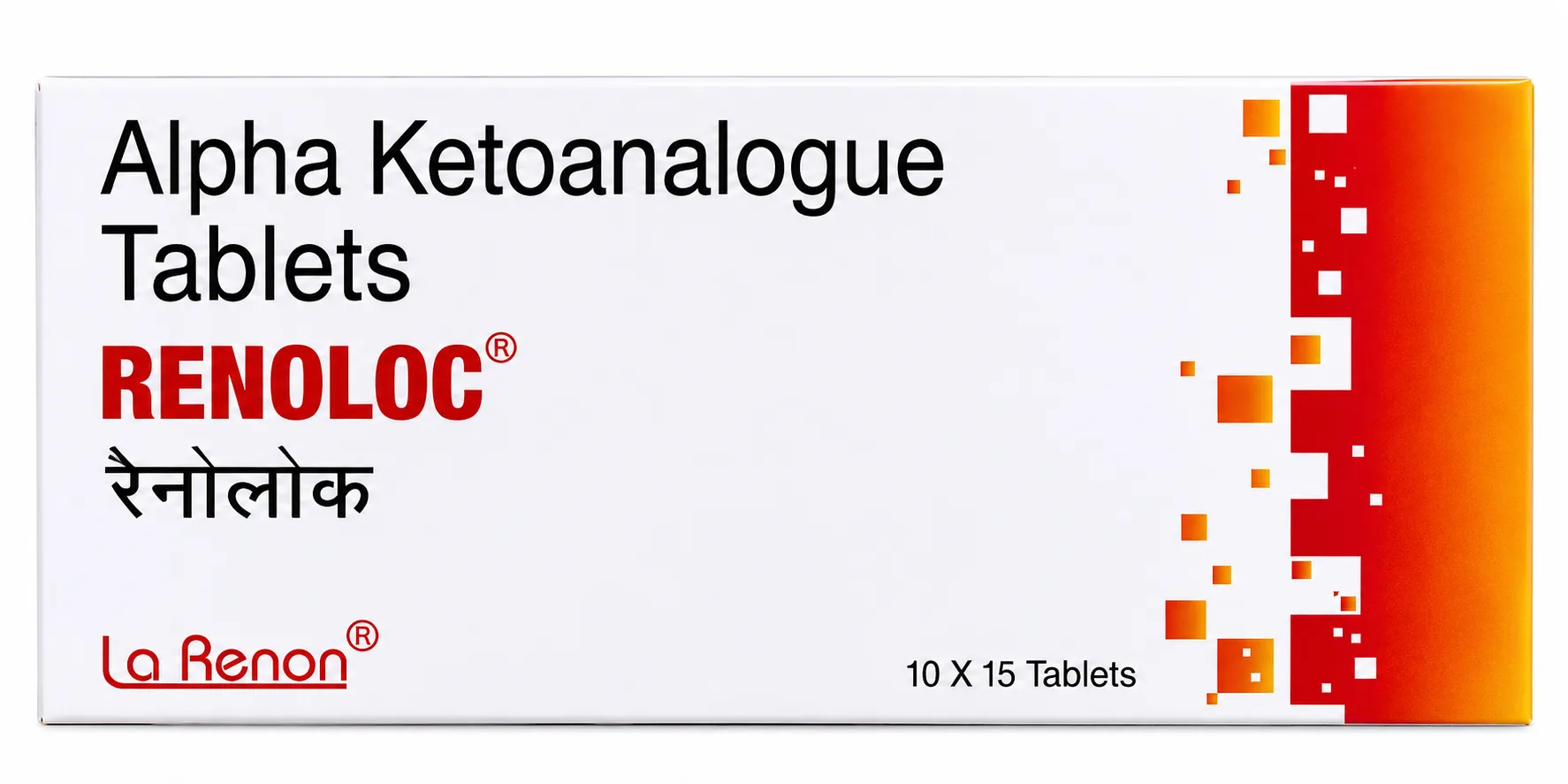
What Is Renolog Tablet?
Renolog Tablet is a renal nutritional preparation generally associated with ketoanalogues and essential amino acids, used as part of the dietary management of patients with chronic kidney disease (CKD).
Chronic kidney disease is a progressive condition in which the kidneys gradually lose their ability to filter waste products and maintain normal fluid, electrolyte, and metabolic balance.
Patients with advanced CKD may require carefully controlled protein intake to reduce the production of nitrogen-containing waste products while maintaining adequate nutrition.
Ketoanalogue formulations provide precursors of certain essential amino acids with a reduced nitrogen burden.
When combined with an appropriately supervised low-protein diet, these formulations may help support nutritional requirements in selected patients with chronic kidney disease.
Renolog Tablet is not a cure for kidney disease and does not replace dialysis when dialysis is medically necessary.
How Does Renolog Tablet Work?
Ketoanalogue and essential amino acid formulations support protein metabolism and nutritional management in patients with impaired kidney function.
1. Provides Amino Acid Precursors
Ketoanalogues are nitrogen-free precursors of certain essential amino acids.
Through metabolic processes such as transamination, the body can convert these compounds into corresponding amino acids.
2. Helps Reduce Dietary Nitrogen Burden
Unlike conventional amino acids, ketoanalogues do not initially contain an amino nitrogen group.
When used with a prescribed low-protein diet, they can help provide essential amino acid precursors while limiting additional dietary nitrogen intake.
3. Supports Protein Nutrition
Essential amino acids are required for protein synthesis, tissue maintenance, and normal physiological functions.
Amino acid and ketoanalogue supplementation may help reduce the risk of nutritional deficiencies during carefully managed protein restriction.
4. Supports Renal Dietary Management
These formulations may help selected patients follow a low-protein or very-low-protein diet under specialist supervision.
However, their effectiveness depends on the overall dietary plan, kidney disease stage, nutritional status, and adherence to treatment.
Uses of Renolog Tablet
Renolog Tablet may be prescribed for the following purposes when its composition is confirmed.
1. Chronic Kidney Disease (CKD)
Used as part of nutritional management in selected patients with chronic kidney disease.
2. Low-Protein Diet Supplementation
May help provide essential amino acid precursors when patients follow a medically prescribed protein-restricted diet.
3. Prevention of Nutritional Deficiencies
May help support amino acid requirements in selected patients receiving dietary protein restriction.
4. Management of Nitrogen Metabolism
Ketoanalogues may help reduce the nitrogen burden associated with dietary protein intake when used appropriately.
5. Supportive Renal Nutrition
May be included in a comprehensive kidney-care plan involving dietary management, laboratory monitoring, and treatment of the underlying kidney disease.
How to Take Renolog Tablet
- Take Renolog Tablet exactly as prescribed by your nephrologist.
- Swallow the tablet whole with water.
- Take it with meals if directed by the product label or prescribing clinician.
- Follow the recommended low-protein dietary plan.
- Do not independently reduce dietary protein intake.
- Maintain adequate calorie intake as advised by a renal dietitian.
- Attend regular kidney-function and nutritional assessments.
- Do not increase or decrease the dose without medical advice.
The correct number of tablets depends on the exact formulation and the nephrologist’s prescription.
Important: An excessively restrictive diet can cause protein-energy wasting and malnutrition. Protein restriction should be supervised by a qualified renal healthcare team.
Common Side Effects
Possible side effects of ketoanalogue and essential amino acid formulations may include:
- Nausea
- Abdominal discomfort
- Bloating
- Mild gastrointestinal upset
- Changes in bowel habits
- Elevated blood calcium levels, particularly with calcium-containing formulations
The type and frequency of side effects depend on the product’s ingredients.
Serious Side Effects
Seek medical attention if you experience:
- Severe or persistent vomiting
- Significant weakness
- Confusion
- Severe constipation
- Excessive thirst
- Frequent urination
- Irregular heartbeat
- Severe allergic reactions
- Symptoms of significantly elevated blood calcium
Important: Some ketoanalogue formulations contain calcium salts and may increase blood calcium concentrations.
Hypercalcemia requires medical evaluation and may require adjustment of supplementation or other calcium-containing treatments.
Contraindications & Precautions
Before taking Renolog Tablet, inform your healthcare professional if you:
- Have elevated blood calcium levels.
- Have a disorder affecting amino acid metabolism.
- Have a history of kidney stones.
- Have severe nutritional deficiencies.
- Are receiving dialysis.
- Have significant gastrointestinal problems.
- Are pregnant or breastfeeding.
- Take calcium supplements.
- Use vitamin D preparations.
- Take phosphate binders.
- Take other prescription medicines or nutritional supplements.
Hypercalcemia: Calcium-containing ketoanalogue formulations may increase blood calcium levels. Regular monitoring is recommended.
Kidney Function: The product should be used as part of a comprehensive CKD management plan.
Nutritional Status: Protein restriction without adequate calorie intake may cause malnutrition.
Drug Interactions: Calcium-containing formulations may interfere with the absorption of certain medicines, including some antibiotics, iron preparations, and thyroid medicines. Dose separation may be required.
Dialysis: Patients receiving dialysis have different nutritional and protein requirements. Ketoanalogue supplementation should not be used without specialist assessment.
Pregnancy and Breastfeeding: Use requires individualized medical evaluation because safety information may be limited.
Advantages
- May support renal nutritional management.
- Provides essential amino acid precursors.
- Can complement a medically supervised low-protein diet.
- May help maintain amino acid availability during protein restriction.
- Supports selected patients with chronic kidney disease.
- Can be incorporated into individualized renal dietary plans.
- Available as an oral tablet.
- Does not contain a corticosteroid or hormone.
Disadvantages / Limitations
- Does not cure chronic kidney disease.
- Does not restore permanently damaged kidney tissue.
- Does not replace dialysis when dialysis is indicated.
- Requires dietary supervision.
- May cause gastrointestinal discomfort.
- Calcium-containing formulations may increase blood calcium levels.
- Requires regular laboratory monitoring.
- May interact with certain medicines.
- Is not appropriate for every CKD patient.
- Effectiveness depends on dietary adherence and nutritional status.
- Should not be used to justify excessive protein restriction.
Important Notes
Renolog Tablet should be used only after confirming its exact composition and obtaining appropriate medical guidance.
For patients with chronic kidney disease, nutritional management may involve monitoring:
- Kidney function and estimated glomerular filtration rate (eGFR)
- Blood urea nitrogen
- Serum creatinine
- Blood calcium
- Serum phosphate
- Serum potassium
- Serum bicarbonate
- Nutritional status and body weight
- Dietary protein and calorie intake
Ketoanalogue supplementation should be combined with an individualized dietary plan prepared by a nephrologist or renal dietitian.
Do not discontinue prescribed kidney medicines or delay dialysis because of nutritional supplementation.
Store according to the manufacturer’s instructions and keep out of reach of children.
Frequently Asked Questions
What are the active ingredients in Renolog Tablet?
Renolog is associated with ketoanalogues and essential amino acids. The exact ingredients and quantities should be confirmed from the product label.
How does Renolog Tablet work?
Ketoanalogues provide precursors that the body can convert into essential amino acids, helping support protein nutrition while limiting additional nitrogen intake.
Can Renolog Tablet improve kidney function?
Renolog may support nutritional management in selected CKD patients, but it does not directly repair damaged kidneys or guarantee improvement in kidney function.
Is Renolog Tablet used for chronic kidney disease?
Yes, ketoanalogue and essential amino acid formulations are used in selected patients with chronic kidney disease, particularly alongside medically supervised protein-restricted diets.
Can Renolog Tablet reduce creatinine levels?
Changes in serum creatinine depend on kidney function, muscle mass, diet, and other factors. Renolog should not be considered a proven creatinine-lowering medicine.
Can Renolog Tablet reduce urea levels?
A supervised protein-restricted diet supplemented with ketoanalogues may reduce nitrogenous waste production in selected patients. Individual results vary.
Should Renolog Tablet be taken with food?
Many ketoanalogue formulations are taken with meals. Follow the instructions on the specific product label and your nephrologist’s prescription.
Can dialysis patients take Renolog Tablet?
Patients receiving dialysis have different nutritional requirements. Use should be determined by their nephrologist.
Can Renolog Tablet cause high calcium levels?
Yes. Certain ketoanalogue formulations contain calcium salts and may cause hypercalcemia.
Does Renolog Tablet require a low-protein diet?
Ketoanalogue supplementation is generally used alongside a carefully planned protein-restricted diet. Dietary changes should be supervised by a nephrologist or renal dietitian.
Can Renolog Tablet cure kidney disease?
No. It is a nutritional support preparation and does not cure chronic kidney disease.