

















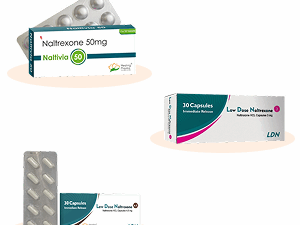






What Is Low Dose Naltrexone 1.5 mg?
Low Dose Naltrexone 1.5 mg, commonly known as LDN 1.5 mg, contains a low amount of naltrexone, a prescription medicine classified as an opioid receptor antagonist.
Naltrexone works primarily by binding to opioid receptors and blocking the effects of opioid agonists.
At standard therapeutic doses, naltrexone is used in the management of alcohol use disorder and opioid use disorder.
At much lower doses, typically around 1–5 mg daily, naltrexone has been investigated for possible effects on chronic pain, immune signaling and certain inflammatory conditions.
The 1.5 mg strength is sometimes prescribed as an initial dose in individualized low-dose naltrexone treatment plans.
Healthcare professionals may gradually adjust the dose depending on treatment response and tolerability.
Researchers have proposed that LDN may influence pain processing and neuroimmune activity. However, these mechanisms remain incompletely understood, and the clinical benefits have not been conclusively established.
Important: LDN 1.5 mg is not a proven cure for fibromyalgia, autoimmune diseases, multiple sclerosis, chronic fatigue syndrome or other chronic medical conditions.
How Does Low Dose Naltrexone 1.5 mg Work?
1. Opioid Receptor Antagonism
Naltrexone binds to opioid receptors and blocks the effects of opioid agonists.
This is its established pharmacological mechanism.
2. Possible Modulation of Pain Signaling
Researchers are investigating whether low-dose naltrexone influences pathways involved in chronic pain perception.
The clinical significance of these effects remains uncertain.
3. Proposed Neuroimmune Effects
Some experimental research suggests that naltrexone may influence signaling pathways associated with neuroimmune activity.
However, these effects have not been conclusively demonstrated as a therapeutic mechanism in humans.
4. Possible Effects on Microglial Activity
Microglia are immune-related cells found in the central nervous system.
LDN has been investigated for possible effects on microglial signaling, but this remains an experimental hypothesis.
5. Potential Influence on Inflammatory Pathways
Researchers have explored whether low-dose naltrexone may affect certain inflammatory processes.
Current evidence does not establish LDN as a general anti-inflammatory medicine.
6. Proposed Endogenous Opioid Regulation
One hypothesis suggests that temporary opioid receptor blockade may influence the body’s endogenous opioid signaling.
This theory has not been conclusively established as the reason for any clinical benefit.
7. Investigational Symptom Management
Small studies have examined whether LDN may improve pain, fatigue or other symptoms in selected patient groups.
Results have been mixed, and larger clinical trials are required.
Potential Uses of Low Dose Naltrexone 1.5 mg
The following are investigational or off-label applications, not established FDA-approved indications.
1. Fibromyalgia
Low-dose naltrexone has been studied for fibromyalgia, a chronic condition associated with widespread pain, fatigue and sleep disturbances.
Some small studies have suggested potential symptom improvement.
However, more recent controlled research has produced mixed findings, and LDN is not an established first-line treatment.
2. Chronic Pain Conditions
LDN is sometimes prescribed off-label for selected chronic pain disorders.
Research is ongoing, and its effectiveness has not been established across chronic pain conditions.
3. Neuropathic Pain
Low-dose naltrexone has been explored for certain types of neuropathic pain.
Clinical evidence remains preliminary.
4. Multiple Sclerosis
LDN has been studied for possible effects on symptoms and quality of life in people with multiple sclerosis.
It has not been shown to prevent relapses or replace approved disease-modifying treatments.
5. Crohn’s Disease
Small clinical studies have investigated LDN in Crohn’s disease.
However, evidence is insufficient to establish it as an effective treatment for inducing or maintaining remission.
6. Myalgic Encephalomyelitis / Chronic Fatigue Syndrome
LDN is sometimes prescribed off-label for ME/CFS.
Reliable clinical trial evidence demonstrating effectiveness remains limited.
7. Complex Regional Pain Syndrome
LDN has been discussed as an experimental approach for complex regional pain syndrome.
There is insufficient high-quality evidence to establish its effectiveness.
8. Other Inflammatory and Autoimmune Conditions
Some clinicians have explored LDN for selected inflammatory or autoimmune conditions.
However, evidence is insufficient to recommend it as a replacement for established treatments.
Important: Patients should not discontinue prescribed disease-modifying medicines, immunosuppressants or other established treatments in favor of LDN without specialist medical advice.
How to Take Low Dose Naltrexone 1.5 mg
Low Dose Naltrexone should be used only according to a qualified healthcare professional’s prescription.
General Administration Instructions
- Confirm the prescribed dose and formulation.
- Verify that the medicine contains naltrexone.
- Follow the prescribed administration schedule.
- Take the medicine according to the pharmacy’s instructions.
- Do not increase the dose without medical advice.
- Inform the prescriber about all current medicines.
- Do not combine naltrexone with opioid medicines without specialist supervision.
- Report persistent or troublesome adverse effects.
- Attend recommended follow-up appointments.
- Do not discontinue established treatment for another condition without medical guidance.
Dosage Information
Low-dose naltrexone is commonly studied or prescribed off-label in doses ranging from approximately 1 mg to 5 mg daily.
1.5 mg once daily is sometimes used as an initial dose in individualized treatment plans.
Some clinicians gradually adjust the dose according to tolerability and treatment response.
However, there is no universally accepted or FDA-approved LDN dosing protocol for chronic pain, fibromyalgia or inflammatory conditions.
The appropriate dose should be determined by the prescriber.
Is 1.5 mg a Starting Dose?
The 1.5 mg strength is sometimes selected as a starting dose in off-label LDN treatment.
However, not every patient requires the same starting dose, and there is no standardized titration schedule supported by sufficient evidence.
When Should LDN Be Taken?
LDN is sometimes prescribed in the evening.
Some patients experiencing sleep disturbances may be advised to take it at another time.
There is no universally established optimal administration time for its off-label applications.
Can LDN Be Taken With Food?
Oral naltrexone may generally be taken with or without food.
Follow the specific product’s instructions.
What If a Dose Is Missed?
Follow the prescriber’s instructions.
Do not double the next dose.
Can LDN Be Stopped Suddenly?
Naltrexone does not generally produce the same physical dependence or withdrawal syndrome as opioid agonists.
However, patients should discuss treatment changes with their healthcare professional.
How Long Does Low Dose Naltrexone 1.5 mg Take to Work?
There is no established or reliably predictable onset of benefit for LDN’s off-label applications.
Clinical studies have evaluated possible symptom changes over several weeks or months.
First 1–2 Weeks
Some patients may experience adverse effects such as vivid dreams, headache, nausea or sleep disturbances.
Approximately 2–6 Weeks
Some individuals report changes in symptoms, but these reports do not establish treatment effectiveness.
Approximately 6–12 Weeks
Research studies may evaluate pain, fatigue and quality-of-life outcomes during this period.
Long-Term Treatment
Long-term effectiveness and safety for many off-label indications remain incompletely established.
Important: Lack of improvement should prompt medical reassessment rather than automatic dose escalation.
Common Side Effects
Possible side effects include:
- Vivid dreams
- Sleep disturbances
- Insomnia
- Headache
- Nausea
- Abdominal discomfort
- Dizziness
- Fatigue
- Anxiety
- Irritability
- Changes in sleep quality
The frequency of these effects specifically at 1.5 mg is not well established.
Serious Side Effects
Seek urgent medical attention if any of the following occur:
- Severe allergic reactions
- Difficulty breathing
- Severe abdominal pain
- Yellowing of the skin or eyes
- Dark urine with other symptoms of liver injury
- Severe or persistent vomiting
- Significant changes in mental health
- Symptoms of precipitated opioid withdrawal
Important Serious Risks
Precipitated Opioid Withdrawal: Naltrexone may trigger withdrawal in people who are physically dependent on opioids.
Blocked Opioid Pain Relief: Naltrexone can interfere with opioid pain medicines.
Liver Injury: Naltrexone has been associated with liver-related adverse effects, particularly at excessive doses or in susceptible patients.
Opioid Overdose: Attempting to overcome naltrexone’s opioid receptor blockade with large opioid doses can cause life-threatening overdose.
Reduced Opioid Tolerance: After stopping naltrexone, individuals may be more sensitive to opioids and face an increased overdose risk.
Contraindications & Precautions
1. Current Opioid Use
Patients taking opioid pain medicines should not begin naltrexone without appropriate medical assessment.
2. Opioid Dependence
Naltrexone may precipitate acute withdrawal in opioid-dependent individuals.
3. Recent Opioid Exposure
An appropriate opioid-free interval may be necessary before starting treatment.
4. Acute Opioid Withdrawal
Naltrexone should not be initiated during acute opioid withdrawal.
5. Liver Disease
Patients with significant liver disease require medical assessment.
6. Acute Hepatitis
Standard naltrexone prescribing precautions advise against use in patients with acute hepatitis or liver failure.
7. Kidney Disease
Patients with kidney impairment may require additional monitoring.
8. Pregnancy
The safety of LDN for off-label indications during pregnancy has not been adequately established.
9. Breastfeeding
Naltrexone passes into breast milk in small amounts.
Treatment decisions require individualized assessment.
10. Children
The safety and effectiveness of LDN 1.5 mg for pediatric off-label conditions have not been established.
11. Older Adults
Older adults may require individualized assessment because of other medical conditions and concurrent medicines.
12. Upcoming Surgery
Patients should inform their surgical and anesthesia teams if they are taking naltrexone.
The medicine may interfere with opioid-based pain management.
13. Chronic Pain Treatment
LDN should not replace established pain management without medical supervision.
14. Autoimmune Disorders
Patients should continue evidence-based treatment unless their specialist recommends changes.
15. Compounded Formulations
LDN 1.5 mg is commonly supplied as a compounded preparation.
Compounded medicines are not FDA-approved as finished products, and their quality depends on appropriate pharmacy standards.
16. Medication Interactions
Important potential interactions or treatment conflicts include:
- Morphine
- Oxycodone
- Hydrocodone
- Codeine
- Tramadol
- Fentanyl
- Methadone
- Buprenorphine
- Other opioid-containing medicines
- Certain cough medicines containing opioids
- Certain antidiarrheal medicines containing opioids
Patients should inform their healthcare professional about all prescription medicines, over-the-counter products and supplements.
17. Mental Health Monitoring
Patients should report new or worsening depression, anxiety or other significant psychological symptoms.
18. Medical Monitoring
Healthcare professionals may monitor:
- Treatment response
- Pain symptoms
- Sleep patterns
- Adverse effects
- Liver function when clinically indicated
- Current opioid exposure
- Medication interactions
- Underlying disease activity
- Quality-of-life outcomes
- Continued need for off-label treatment
Potential Advantages
- Low-dose oral formulation.
- Commonly used as an initial dose in off-label treatment plans.
- Allows individualized dose adjustment.
- Established opioid receptor antagonist mechanism.
- Investigated for fibromyalgia.
- Investigated for selected chronic pain conditions.
- Investigated for certain inflammatory disorders.
- Can be prepared in customized strengths by a compounding pharmacy.
- May be incorporated into specialist-supervised treatment plans.
- Generally not associated with opioid-like physical dependence.
Note: These characteristics do not establish effectiveness for unapproved conditions.
Disadvantages / Limitations
- Not FDA-approved for chronic pain.
- Not FDA-approved for fibromyalgia.
- Not FDA-approved for autoimmune disorders.
- Limited high-quality clinical evidence.
- Mixed results in controlled studies.
- No universally accepted off-label dosing schedule.
- May cause vivid dreams.
- May cause insomnia.
- May cause headaches.
- May cause nausea.
- May cause dizziness.
- Can interfere with opioid pain medicines.
- Can precipitate opioid withdrawal.
- Requires caution in liver disease.
- Long-term safety for off-label indications remains incompletely characterized.
- Often requires compounding.
- Compounded preparations are not FDA-approved finished medicines.
- Does not replace established disease-specific treatment.
Important Notes
Generic Name: Naltrexone.
Common Form: Naltrexone Hydrochloride.
Strength: 1.5 mg.
Common Abbreviation: LDN.
Dosage Form: Commonly Compounded Oral Capsules.
Drug Class: Opioid Receptor Antagonist.
Therapeutic Category: Prescription Medicine / Off-Label Therapy.
Established Mechanism: Opioid receptor antagonism.
Investigational Mechanisms: Possible effects on pain processing and neuroimmune signaling.
Potential Off-Label Applications: Fibromyalgia, selected chronic pain conditions and certain inflammatory disorders.
FDA Approval: Naltrexone is approved for specific substance use disorders at standard doses; LDN 1.5 mg is not FDA-approved for chronic pain or autoimmune conditions.
Dosage: Individualized by the prescriber.
Opioid Warning: May precipitate withdrawal or interfere with opioid pain relief.
Liver Precaution: Requires assessment in patients with liver disease.
Pregnancy Precaution: Requires individualized medical assessment.
Storage: Follow the manufacturer or dispensing pharmacy’s instructions.
Frequently Asked Questions
1. What is Low Dose Naltrexone 1.5 mg used for?
LDN 1.5 mg is sometimes prescribed off-label for selected conditions such as fibromyalgia and chronic pain. Its effectiveness for these conditions has not been firmly established.
2. What is the active ingredient in LDN 1.5 mg?
The active ingredient is naltrexone, commonly supplied as naltrexone hydrochloride.
3. Is Low Dose Naltrexone an opioid?
No. Naltrexone is an opioid receptor antagonist, not an opioid painkiller.
4. How does Low Dose Naltrexone work?
Its established action is opioid receptor blockade. Other proposed effects on pain and immune signaling remain under investigation.
5. Is 1.5 mg a common starting dose for LDN?
Yes. Some clinicians use 1.5 mg as an initial dose in individualized off-label treatment plans, although there is no standardized dosing protocol.
6. Can LDN help with fibromyalgia?
Some small studies have suggested potential benefits, but controlled evidence is mixed and insufficient to establish LDN as a standard fibromyalgia treatment.
7. Can LDN treat chronic pain?
LDN is being investigated for selected chronic pain conditions, but effectiveness has not been established across these disorders.
8. Can LDN treat autoimmune diseases?
There is insufficient evidence to establish LDN as an effective treatment for autoimmune diseases.


